




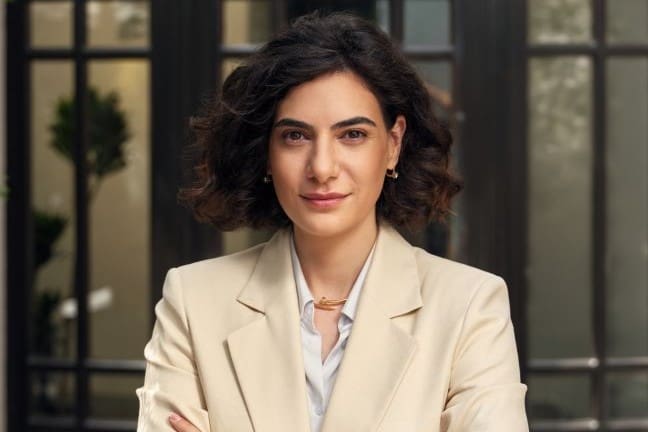
Natia Pachikashvili
“Banking executive with 15+ years’ experience, now leading and shaping Georgia’s SME banking landscape”
Graduation Year: HEC Paris Class of 2024
Current Role: Director of SME Business, TBC Bank
Why did you decide to pursue an Executive MBA?
Before joining the EMBA, I was looking for much more than another academic qualification. After many years of professional experience, I had reached a point where I wanted to step outside the intensity of day-to-day execution and look at business and leadership from a broader perspective.
I wanted greater international exposure and the opportunity to learn alongside people whose professional and cultural experiences were very different from my own. I also wanted to complement the practical knowledge I had accumulated throughout my career with a more structured understanding of strategy, leadership, and how organizations make decisions in complex environments.
There was also a personal motivation. I wanted to challenge some of the assumptions and ways of thinking that naturally develop after many years in one profession. I saw the EMBA as an opportunity to become a more rounded leader and prepare myself for responsibilities beyond my existing functional expertise.
What lead you to the HEC Paris EMBA, and how did you know this school and this program was the right fit for you?
My decision to pursue an EMBA was strongly influenced by a one-week senior management program I attended at a leading university in Switzerland. It was my first real exposure to executive education at that level, and it showed me how valuable it can be to step away from your familiar professional environment and learn alongside experienced leaders from different backgrounds.
I applied to three prestigious universities and was fortunate to be accepted by all three. HEC Paris stood out for several reasons.
Its academic reputation and emphasis on leadership were important, but what particularly attracted me was the international diversity of the cohort. I did not want an experience that simply reinforced what I already knew from banking or from my own market. I wanted to be challenged by people from different countries, industries, and cultures.
The HEC team also made a very strong impression during the enrollment process. They were open, supportive, and genuinely engaged. It gave me an early sense of the culture behind the institution, and that welcoming and collaborative spirit continued throughout the program.
Ultimately, it was the combination of academic excellence, international diversity, flexibility, and culture that made HEC feel right for me.
How did you customize your learning experience?
I was quite deliberate about using the EMBA to develop capabilities that complemented, rather than simply reinforced, my existing professional strengths.
The cohort itself was an important part of that. Working with executives representing more than 20 nationalities and many different industries constantly exposed me to perspectives I would not normally encounter in my professional environment.
One of my most deliberate choices was the “Innovate Like an Entrepreneur” specialization, including the week at Babson College in Boston. At the time, my career had been built largely in risk management, so I was professionally trained to identify risks, challenge assumptions, and think carefully about what could go wrong.
I deliberately chose a specialization that would push me in another direction: identifying opportunities, experimenting, thinking entrepreneurially, and becoming more comfortable with uncertainty.
That contrast became particularly valuable later in my career. It helped me develop a mindset that combines the discipline of risk management with a much stronger orientation toward opportunity and business growth.
How did you balance the demands of work, family, and the program while studying?
Balancing a demanding professional role with an EMBA was certainly challenging. For me, the key was treating the program as a serious long-term commitment and becoming very disciplined about how I used my time.
The hardest moments were when professional responsibilities and academic deadlines collided. As a senior executive, work does not stop because you have an exam, a group project, or an upcoming module.
The experience taught me to prioritize much more rigorously, plan ahead, and delegate when necessary. It also made me appreciate how important the support of the people around you is. The program was demanding, but because it was designed for experienced executives, I could integrate the learning into my professional life rather than stepping away from it.
What’s a standout memory from your time at HEC Paris?
The two-day outdoor leadership seminar is probably the experience that has stayed with me most.
Interestingly, I was quite anxious beforehand. I was concerned that some of the physical activities might be challenging or uncomfortable. In the end, it became one of the most rewarding experiences of my entire EMBA.
We were placed in situations where we had to lead, communicate, collaborate, and make decisions without having complete certainty about what would happen next. Suddenly, leadership was no longer something we were discussing in a classroom; we could see our own behaviors and reactions in real time.
For me, it was also a powerful exercise in self-awareness. I became more conscious of my strengths, but also of where I needed to develop. It reinforced how much communication, trust, and cultural intelligence matter when you are leading people through uncertainty.
I went into the seminar thinking about whether I would manage the physical challenges and came out thinking much more deeply about how I lead. That contrast is probably why the experience has stayed with me.
How has the program helped you grow personally or professionally since graduating?
The clearest evidence of the EMBA’s impact is probably the direction my career took after graduation. I entered HEC with a career built predominantly in risk management. After graduating, I was first promoted to Deputy Chief Risk Officer. Then came a much bigger transition: I moved from risk management into the business and took on my current role as Director of Small and Medium-sized Businesses.
For me, that represented much more than a change of title. I moved from a function primarily responsible for understanding and managing risk into a role where I am directly responsible for customers, growth, strategy, and commercial opportunities.
The EMBA played an important role in preparing me for that transition. It gave me a broader understanding of how organizations create value and greater confidence in operating beyond the boundaries of my original functional expertise.
The “Innovate Like an Entrepreneur” specialization was particularly relevant. My risk background taught me to ask, “What could go wrong?” This entrepreneurial experience encouraged me to also ask, “What opportunity are we missing?” Today, I believe good business leadership requires both questions.
In my current role, I draw on both sides of that experience: the analytical discipline and risk awareness developed throughout my earlier career, together with the strategic, entrepreneurial, and customer-oriented mindset I strengthened at HEC.
Is this the industry and role you envisioned yourself when you entered the program?
The industry is the same, but the role is certainly not one I would have predicted when I entered the program.
I had spent many years building deep expertise in risk management, and at that point I naturally imagined my career continuing along that path. I could not have anticipated that I would soon be leading the SME business.
Looking back, however, the transition makes sense. The EMBA encouraged me to look beyond functions and think about the organization as a whole: how strategy, risk, customers, people, innovation, and commercial decisions connect.
Today, I bring together perspectives from finance, risk management, and business leadership. That combination is particularly valuable in SME banking, where understanding opportunity and understanding risk cannot really be separated.
So, HEC did not take me away from banking. It helped me see a much broader range of possibilities for what I could do within the industry.
What are some of the biggest takeaways you gained from the experience?
One of my biggest takeaways was learning to become comfortable not having all the answers.
Earlier in your career, expertise is often what allows you to progress. As your responsibilities become broader, however, leadership increasingly becomes about asking the right questions, listening to people who know things you do not, and making decisions when the information is incomplete.
HEC strengthened my strategic thinking, self-awareness, communication, cultural intelligence, and ability to operate in uncertain environments.
I also became much more conscious of how differently people can interpret the same situation. Reading a room of colleagues from more than 20 countries requires a different kind of listening from what I had needed earlier in my career.
Perhaps most importantly, I learned that leadership is not about being the person with every answer. It is about creating the conditions in which different perspectives can be heard, making a decision when necessary, and bringing people with you – especially when circumstances are changing quickly.
What advice would you share with someone thinking about pursuing an Executive MBA?
I would tell prospective participants not to approach the EMBA simply as another academic qualification.
Of course, the academic content matters, but much of the real value comes from everything around it: your classmates, the conversations outside the classroom, the experiences that challenge you, and the opportunity to see yourself and your career from a different perspective.
Be genuinely curious about the people around you. Some of the most valuable learning comes from someone whose industry, culture, or professional experience is completely different from yours.
I would also encourage people to choose experiences that feel slightly uncomfortable. Looking back, some of the parts of the EMBA I was initially least comfortable with – the outdoor leadership seminar and choosing an entrepreneurial specialization despite coming from risk management – became some of the most valuable.
And finally, give the program the time and energy it deserves. Combining an EMBA with a senior professional role is demanding, but the return is much broader than the degree itself. You gain knowledge, relationships, perspective, confidence, and a much deeper understanding of yourself as a leader.
For me, perhaps the best evidence of that is that I entered HEC expecting to become better at what I was already doing. I left prepared to do something I had never imagined myself doing.
DON’T MISS: 10 profiles of HEC Paris EMBA Alumni
© Copyright 2026 Poets&Quants. All rights reserved. This article may not be republished, rewritten or otherwise distributed without written permission. To reprint or license this article or any content from Poets&Quants, please submit your request HERE.

