




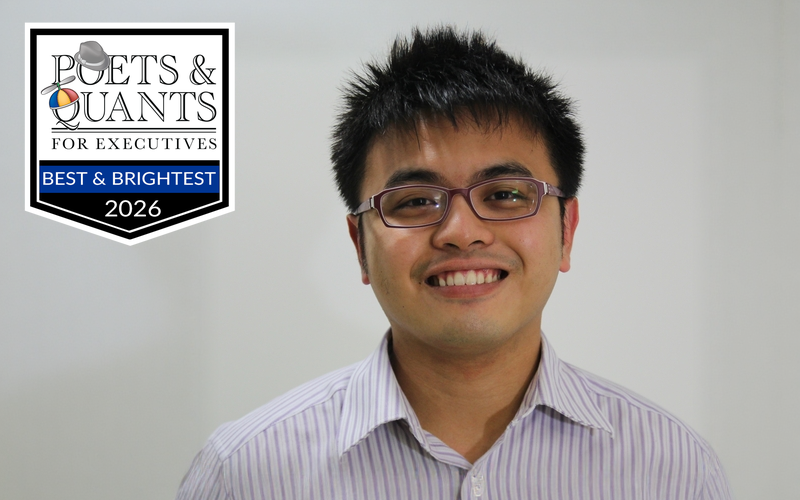
Jonathan Ng
INSEAD
Age: 35
“God-fearing, unconventional, dentist, film director, and a curious entrepreneur who wants to keep building.”
Hometown: Sarawak, Malaysia. Previously in Perth, Australia for 17 years.
Family Members:
1) My foundation- the most resilient woman I know, Kok Miaw Jin (my mother)
2) My two most precious- Wen Wen Lau (my wife) and my daughter, Hanna Ng
3) My role models- Ng Kiew Kong (my father), and my older brothers, John Ng Wui Hua and Jimmy Ng
Fun fact about yourself: Frequent flyer and points optimizer – 80+ flights in 170 days with a 6-month-old, from Arctic motor homing to paragliding in the Swiss Alps. I specifically arranged the round-the-world trip and with business and first class, so that my wife will agree to my crazy idea.
Undergraduate School and Degree: Bachelor of Dental Science (1st Class Honours, University of Western Australia)
Where are you currently working?
Director of Own Companies – Yeung Lok Group of Companies, Allied Dental Group of Clinics, Ng Investment Property
Extracurricular Activities, Community Work and Leadership Roles:
I’ve been involved in community and leadership roles across creative, faith-based, and youth initiatives. I co-produced and directed two gospel film projects, working with teams of 60–70 volunteers and contributing to fundraising efforts of over AUD100k, with a second movie project in progress.
At Immanuel Methodist Church, I served as Sunday School Superintendent, where we expanded our volunteer team and introduced more structured training. I also helped establish a junior youth fellowship named Catalyst to support engagement.
I’ve also been involved in LifeImpact camps, supporting leadership and faith development programs across Australia, the U.S., and Canada. These are 3–4-day life simulation camps designed to help participants discover the purpose of life.
Which academic or extracurricular achievement are you most proud of during business school? Outside of work, I’m most proud of my journey in filmmaking within my church. I progressed from a hands-on creator—writing, directing, and editing—to leading larger productions with teams of 60–70 volunteers.
That transition from execution to leadership was particularly meaningful. Having worked across roles gave me a deep understanding of the creative process, which allowed me to lead with clarity and empower others to take ownership. It reinforced a broader lesson I now apply in business—impact comes from building and enabling the right team to scale beyond myself.
What achievement are you most proud of in your professional career? I am most proud of redefining what was expected of me. Coming from a small city, the path into dentistry was already seen as the endpoint. I remember clearly the moment I realized that staying within that path would limit the scale of impact I could create.
Moving from clinical practice into building businesses and later stepping into a global environment through INSEAD was not a natural progression—it meant going against expectations and taking on uncertainty. What I value most now is being able to show others from similar backgrounds that their starting point does not define the scale at which they can operate.
Who was your favorite MBA professor? It’s hard to pick just one—INSEAD consistently raises the bar, and many professors have challenged my thinking in different ways.
If I had to choose, Professor Seung-Youn Oh stands out. Her International Political Analysis module made geopolitics not just interesting, but directly relevant to business decisions. Her classes were engaging and intellectually sharp, often leading to genuine “Oh!!” moments (pun intended) where complex dynamics clicked and became actionable.
Why did you choose this school’s executive MBA program? I chose INSEAD EMBA because I had outgrown local perspectives. Operating across healthcare and agriculture, I needed to think at a global, system level—not just optimize within one market.
The differentiator was the cohort: operators managing real scale, where ideas are pressure-tested through execution. As I work toward listing my family business and scaling Allied Dental Group, INSEAD was the only program that matched that ambition.
What is the biggest lesson you gained during your MBA and how did you apply it at work? I went into the executive MBA expecting to become a more complete leader. Instead, I learned that effective leadership is intentionally incomplete.
The role of a leader is not to fill every gap, but to recognize where others are stronger and build teams that amplify collective capability.
At work, this shifted how I operate. For example, instead of personally driving operational decisions across my businesses, I focused on hiring and empowering leaders with deeper domain expertise, while I concentrated on direction, capital allocation, and key decisions. It may feel slower initially, but once the right structure is in place, the organization moves faster and scales more effectively.
Give us a story during your time as an executive MBA on how you were able to juggle work, family and education? It was difficult, and I wouldn’t say I juggled it perfectly. I was running multiple businesses and teams, stepping into new areas, keeping up with INSEAD, and raising a young child at the same time.
I remember one midnight when everything caught up with me—I felt completely overwhelmed between work and implementation essays. I broke down, hugged my wife, and told her I felt beaten. After that, I stepped away to reset—ending up in the kitchen, quietly marinating a steak for the next day. That small moment helped me regain composure, and I went back to continue working late into the night.
Looking back, I realized it was never about finding balance. It was about learning how to pause, regain clarity, and keep moving forward despite the pressure.
What advice would you give to a student looking to enter an executive MBA program? Don’t do an executive MBA just to change your career—it delivers the most value when you’re already in motion. The impact comes from applying what you learn in real time, not accumulating knowledge.
Be intentional with your time. You won’t be able to do everything, so focus on the people, conversations, and experiences that will stretch your thinking the most.
Most importantly, lean into discomfort. The real value comes from challenging your assumptions and being open to perspectives beyond your own.
What was your biggest regret in business school? My biggest regret was not being as present as I could have been. It’s ironic—at the start, you’re focused on getting through the intensity, but as it comes to an end, you begin to miss it.
The executive MBA is a unique pause point—a chance to reflect on where you’ve been and think more intentionally about the future you want to build. In hindsight, I would have slowed down more to fully appreciate the people, conversations, and moments because that’s ultimately what makes the experience meaningful. It’s a reminder I now carry forward—to be more present, even while in motion.
What is one way that your business school has integrated AI into your programming? What insights did you gain from using AI? One way the program integrated AI was through a marketing simulation where we competed against each other to deliver the most value to a campaign. We used AI to break down data, generate initial hypotheses across customer acquisition and conversion stages, and build recommendations across the funnel. It was particularly useful in structuring information quickly and exploring different strategic angles.
My main insight is that AI significantly expands the breadth of learning—it allows me to explore ideas, test assumptions, and satisfy curiosity at a speed that was previously impossible. However, depth still requires context, judgment, and experience.
I found AI most valuable as a thinking partner—useful for synthesizing information and challenging ideas—but the true bottlenecks in decision-making still require human insight.
What was the main reason you chose an executive MBA program over part-time or online alternatives? I chose an executive MBA for the level of commitment and peer quality it attracts. At this stage of my career, I wanted to learn alongside people who are equally invested, operating at scale, and willing to challenge themselves.
The in-person format was important to me. While more demanding, it creates a level of engagement and connection that’s hard to replicate remotely. Being physically present forces deeper conversations, stronger relationships, and more honest exchanges of ideas.
I’ve always been drawn to environments that are slightly uncomfortable. Even when selecting courses, I gravitated toward the more demanding ones—not because they were harder, but because they tend to attract people who think deeply and push boundaries. Those interactions have shaped not just how I lead, but how I see opportunities and challenges more broadly.
How did you finance your EMBA and what did you do to make tuition and associated costs more affordable? I financed my EMBA through a mix of business support and personal funds. In many ways, affordability is relative—if you believe in the value it brings, it becomes an investment; if not, no price feels justified.
That perspective helped me stay focused on long-term returns, while managing costs through deliberate trade-offs and planning.
What is your ultimate long-term professional goal? My long-term goal is to build a diversified conglomerate across healthcare, agriculture, and adjacent sectors, scaling beyond local markets while contributing meaningfully to the development of my city and state.
Coming from a small city where expectations were limited, I want to demonstrate that globally relevant businesses can be built from anywhere. At the same time, I aim to build a sustainable family legacy—creating organizations that endure and create opportunities across generations.
DON’T MISS: BEST & BRIGHTEST EXECUTIVE MBAS: CLASS OF 2026
© Copyright 2026 Poets & Quants. All rights reserved. This article may not be republished, rewritten or otherwise distributed without written permission. To reprint or license this article or any content from Poets & Quants, please submit your request HERE.

