





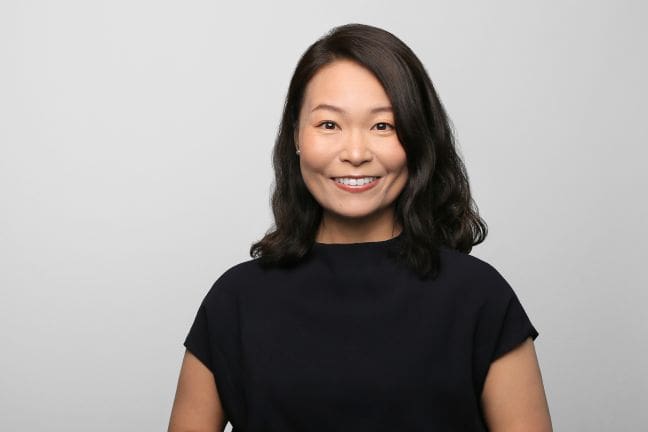
Naomi Sasaki
“Corporate-wide project leader shaping strategy, driving execution, and leading cross-functional organizational transformation initiatives”
Graduation Year: HEC Paris Class of 2024
Current Role: Corporate Projects Manager at Fuji Electric Europe, GmbH
Why did you decide to pursue an Executive MBA?
Over the course of 15 years, I had built experience across corporate planning, HR, sales, and other functions, primarily in Japan and other Asian countries. At one point, I took a step back and reflected on what I had originally wanted to achieve through my career and what I was actually doing at the time. I realized I needed to make some changes to move toward where I wanted to be over the next 20 years.
I felt that pursuing an MBA in a different country and environment could provide the catalyst I needed to change direction and move closer to where I wanted to go.
There were three specific reasons I wanted to pursue an MBA. First, I wanted to revisit and build a more systematic foundation in the core disciplines that business leaders need, including areas such as accounting, finance, and marketing, which I had had relatively limited exposure to in my previous roles. Second, I had a strong interest in new business creation and entrepreneurship and wanted to learn about them through hands-on experience. Third, I wanted to learn alongside people from diverse backgrounds and develop the broader perspectives, adaptability, and ways of working needed to succeed in a global business environment.
I initially considered a full-time MBA. However, an HEC admissions advisor suggested that I explore the EMBA. The opportunity to continue working while studying, together with the fact that my cohort would consist of professionals with a similar level of experience and maturity, made the EMBA a better fit for me, so I decided to apply.
What led you to the HEC Paris EMBA, and how did you know this school and this program was the right fit for you?
I first became seriously interested in HEC Paris at an event in Tokyo where alumni from several business schools gathered. What struck me most at the event was the people. The HEC alumni I spoke with were open, collaborative, and genuinely approachable. The overall atmosphere made me feel that HEC could be a place where I would fit in.
As I researched the program further, I was particularly attracted by its strong focus on leadership, the entrepreneurship specialization and access to the entrepreneurial ecosystem, the diversity of nationalities, industries, and seniority levels in the cohort, and a class size that allowed meaningful interaction.
My experience during the application process reinforced that impression. The admissions team was very supportive, and conversations with Japanese EMBA alumni confirmed the collaborative culture I had sensed from the beginning.
How did you manage the EMBA alongside your work in Japan?
During the core modules, I was working for my previous employer in Japan. To attend five modules in person, I took one or two weeks of leave each time. To put that into perspective, the average employee in Japan takes only around 11 days of paid leave a year. On top of that, each trip involved about 15 hours of travel each way. Looking back, I sometimes wonder how I managed it.
As soon as I was admitted, I spoke with my manager about why the EMBA was important for me and how the learning could also benefit my work. I was fortunate to receive strong support, and I remain very grateful to my manager at the time, as well as to the colleagues who covered for me while I was away.
How did you customize your learning experience?
For my specialization, I chose Test Your Startup, spending one week each in Paris and San Francisco developing a business idea. We applied what we had learned in the core modules, incorporated feedback from faculty and advisors, built a business plan, and finished with a mock fundraising pitch. Experiencing the full journey from idea to pitch was extremely valuable.
San Francisco was especially memorable because we learned directly from venture capitalists and serial entrepreneurs and experienced the startup ecosystem firsthand. I later developed the same idea further for my Capstone project, which allowed me to build on the specialization and take the learning to a deeper level.
How did you balance the demands of work, family, and the program while studying?
I was fortunate to have strong support from my manager and colleagues, which allowed me to focus as much as possible on the program during the modules.
The hardest part was managing the large volume of assignments and readings before each module, as well as attending online sessions across time zones while continuing with my regular workload.
There was no magic formula—I simply had to find ways to make it work. Recordings provided by HEC and mutual support among classmates were particularly helpful during the most demanding periods.
What’s a standout memory from your time at HEC Paris?
One of the most unexpected and impactful experiences was the Outdoor Leadership Seminar.
We had already studied leadership theories in class, but this program gave us the opportunity to test them in practice through outdoor team activities. Members took turns leading the team, which allowed us to observe different leadership styles, learn from one another, and give and receive immediate feedback.
The exercises recreated many situations leaders face in business: assigning roles based on individual strengths and traits, choosing the right leadership approach, and making decisions with limited time and incomplete information. It gave me a much clearer understanding of my own leadership style and areas for improvement.
While preparing for this interview, I reread the reflective essay I wrote at the time and was struck by how relevant many of those lessons still are to my work three years later.
How has the program helped you grow personally or professionally since graduating?
The biggest professional change after the EMBA was moving to Germany and joining my current company in a new industry and role.
I was initially hired as a project manager for sustainability reporting, but my responsibilities have since expanded to include driving AI and digital initiatives, supporting operational improvement within business units, and conducting market research. Across all of these areas, I regularly draw on what I learned at HEC.
For example, when we started transformation projects, the lessons from Orchestrating Transformation reminded me of the importance of securing buy-in from different stakeholders. Concepts from Business Strategy, such as pricing strategy, have also provided useful frameworks and a common language when discussing business issues with senior leaders.
The program also changed my mindset. Completing a demanding EMBA in a highly diverse European environment gave me greater confidence in navigating unfamiliar situations. Starting the program involved both financial and career risk, but taking that risk led to new connections, new opportunities, and ultimately a new career. It changed not only how I think about work, but also how I approach major choices in life.
Is this the industry and role you envisioned yourself when you entered the program?
No, this was not the industry or position I originally had in mind. In hindsight, however, it has been a very good fit because I can build on my previous experience in corporate planning and project management while continuing to take on new challenges.
I previously worked at the headquarters of a Japan-based global logistics company, and I now work for the European sales subsidiary of an electrical equipment manufacturer. The nature of my current role is more cross-functional and involves working closely with business units.
A large part of my work is about identifying practical improvements that can help the business perform better and then working with the teams to put them into practice. It can be demanding, but it is also very rewarding to see a direct connection between the initiatives I work on and business results.
What are some of the biggest takeaways you gained from the experience?
One lesson from the EMBA only really clicked for me later, when a senior leader pointed it out: in today’s rapidly changing world, you cannot wait for perfect information. You have to make the best possible decision with the information available and keep moving forward. For me, one of the biggest takeaways from the program was therefore how to improve both the quality and speed of decision-making under uncertainty. Across many of the courses, especially Business Environment and Corporate Strategy, I learned to look at issues from multiple perspectives, build alignment among people with different views, and balance the need for speed with effective risk management.
Another major takeaway was the exposure to classmates and members of the HEC community from very different countries, industries, and roles. Learning how to navigate differences in communication styles, find common ground, and move forward together has become one of the most valuable capabilities I developed during the HEC Paris EMBA.
For those thinking about applying to the HEC Paris EMBA, what advice would you share with them?
There are many outstanding leaders who have never pursued an MBA or EMBA, so I do not believe it is something everyone needs. For the right person, however, the HEC Paris EMBA can help accelerate their journey toward where they want to go.
When I made my own decision, I felt I would rather take the chance and regret it than regret never having tried. So when I found myself genuinely drawn to the opportunity, I chose to follow that instinct.
We only get one life. My advice is to choose the path that gives you the best chance of building a career that feels both fulfilling and enjoyable to you.
DON’T MISS: 10 profiles of HEC Paris EMBA Alumni
© Copyright 2026 Poets&Quants. All rights reserved. This article may not be republished, rewritten or otherwise distributed without written permission. To reprint or license this article or any content from Poets&Quants, please submit your request HERE.

