





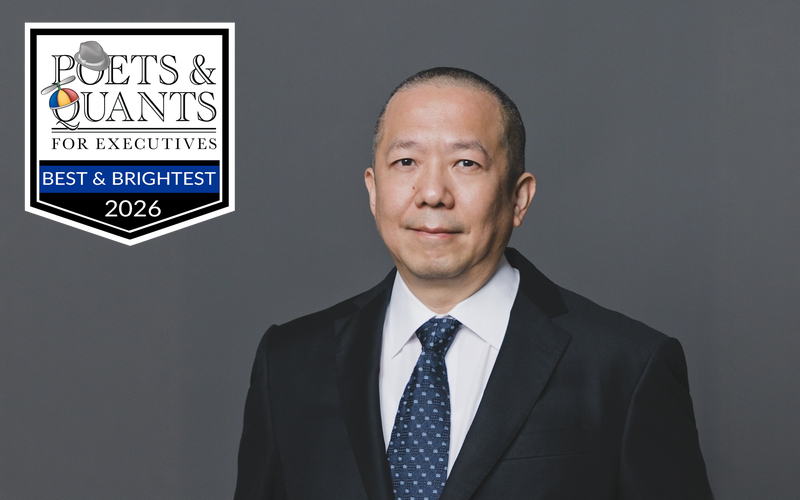
Ka-hing (Ken) Ng
University of Chicago, Booth School of Business
Age: 55
“I am motivated, intelligent, understanding, caring, patient and diligent.”
Hometown: Hong Kong, China
Family Members: Maggie (Wife), Christopher (son 24), Victoria (daughter 22), Isabella (Daughter 17)
Fun fact about yourself: I will be graduating in the same week and in the same city as my daughter Victoria.
Undergraduate School and Degree: University of Toronto, Honours Bachelor of Arts
Where are you currently working? GPTX Investment Management. I am the CIO.
Extracurricular Activities, Community Work and Leadership Roles: I like to cook and spend time with my kids on the weekends
Which academic or extracurricular achievement are you most proud of during business school? I am most proud of completing a demanding program like the Booth Executive MBA while continuing to work full time. It represents the fulfillment of a personal promise—to earn my MBA.
What achievements are you most proud of in your professional career? I am most proud of being promoted to Managing Director 16 years ago. Earning a promotion within the trading department of an investment bank was a milestone that recognized years of perseverance, discipline, and leadership.
Who was your favorite MBA professor? My favorite MBA professor was Professor Scott Meadow, who taught Entrepreneurial Finance and Venture Capital. His ability to combine academic rigor with real-world experience made the subject matter come alive, offering both intellectual depth and practical insight.
Why did you choose this school’s executive MBA program? I chose Chicago Booth because it offers the strongest executive-format MBA program, rooted in a rich history of analytical rigor. The program’s emphasis on data-driven thinking and its global reputation for academic excellence made it the ideal choice for me.
What is the biggest lesson you gained during your MBA and how did you apply it at work? The most valuable lesson I learned was to be open to new ideas and diverse perspectives. The interactive nature of class discussions encouraged me to think more broadly and appreciate differing viewpoints. Now at work, I am more receptive to alternative opinions and try to foster a more collaborative decision-making process.
Give us a story during your time as an executive MBA on how you were able to juggle work, family and education? Just before the start of our final week, my mother was hospitalized. Balancing her care with the demands of class preparation was incredibly challenging. However, I was fortunate to have a supportive study group who helped me manage the academic load during this difficult time. It reinforced the power of teamwork and community within the Booth program.
What advice would you give to a student looking to enter an executive MBA program? My advice is to ensure your family and employer are fully supportive before committing. The workload, from classes to assignments and readings, is significant. Having supportive people around you will be essential to managing the challenges, while also making the most of the experience.
What was your biggest regret in business school? My biggest regret was not taking more time to meet and connect with a wider circle of classmates. While I have made lifelong friends, I wish I had stepped out of my comfort zone to engage with more people from different backgrounds and industries.
What is one way that your business school has integrated AI into your programming? What insights did you gain from using AI? During the Spring 2026 quarter, our Business Analytics class provided a hands-on introduction to AI and its real-world applications. The course offered current and practical insights into this fast-evolving field. My biggest takeaway is realizing that AI will fundamentally reshape our lives, much like personal computers did in the 1980s. I’m excited for the productivity and efficiency gains that AI promises to bring to our lives.
What was the main reason you chose an executive MBA program over part-time or online alternatives? I chose the executive MBA format because I wanted a rigorous challenge that would stretch me. Given my established career in finance, a part-time or online program wouldn’t have provided the same level of engagement. The Booth Executive MBA offered the intellectual depth, peer quality, and challenges I was seeking to complete my educational experience.
How did you finance your EMBA and what did you do to make tuition and associated costs more affordable? I personally financed my EMBA using my own savings. I’ve been fortunate to be in a position, both financially and professionally, where I could pursue this program without having to make major adjustments or compromises.
What is your ultimate long-term professional goal? My ultimate long-term goal is to launch my own fund. I hope to leverage my experience to build something lasting, while also creating opportunities for others, including future Booth Executive MBA graduates, to grow and contribute.
DON’T MISS: BEST & BRIGHTEST EXECUTIVE MBAS: CLASS OF 2026
© Copyright 2026 Poets & Quants. All rights reserved. This article may not be republished, rewritten or otherwise distributed without written permission. To reprint or license this article or any content from Poets & Quants, please submit your request HERE.

