




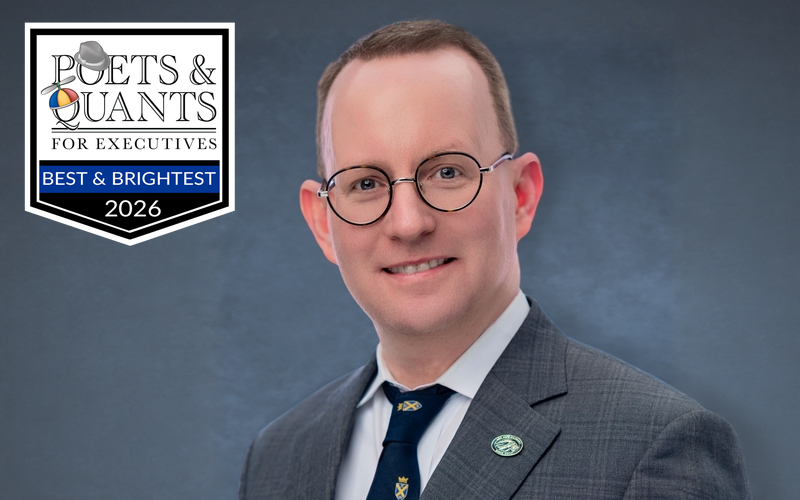
Charles William Lentz, Ed.D.
The Wharton School, University of Pennsylvania
Age: 54 years old
“Strategic, community-centered leader passionate about innovation, service and inspiring visionary legacies that are long-lasting.”
Hometown: Originally from Abington, Pennsylvania, currently residing in Doylestown, Pennsylvania
Family Members: My husband, Matthew, my father and my brother, sister-in-law, and two nieces, one of whom also went to business school.
Fun fact about yourself: My interest in family genealogy compelled me to become engaged in many of the historic colonial heritage societies in Philadelphia. During my work and leadership in some of those organizations, I had the opportunity to meet and engage with Prince Edward of England and the current King Charles III and Queen Camilla of England during their visits to Philadelphia.
Undergraduate School and Degree:
Indiana University of Pennsylvania, Indiana, PA
B.S. Elementary Education (Summa Cum Laude)
Gratz College, Melrose Park, PA
M.A. Education (Summa Cum Laude)
Arcadia University, Glenside, PA
M.S. Educational Leadership (Summa Cum Laude)
Widener University, Chester, PA
Ed.D. Educational Leadership (Summa Cum Laude)
Where are you currently working?
New Hope-Solebury School District, Superintendent of Schools
Middle Bucks Institute of Technology, Superintendent of Record
Extracurricular Activities, Community Work and Leadership Roles:
Wharton Leadership Roles/Extracurricular Activities
Student Leadership Committee at Wharton – Wharton Executive MBA 50 – Academic Representative
Wharton School Curriculum Innovation and Review Committee – Wharton Executive MBA Student Representative
Out for Business Executive Committee – Wharton Executive MBA Student Representative
Community Work/Leadership Roles
Arcadia University
Former Board of Trustees Chairman
Member Board of Trustees
Chairman Mission and Identity Committee
Ad-Hoc Board Assessment Committee
Member Executive Committee Board of Trustees
Alumni Mentor
American Association of School Administrators
EdLeader Promise Innovation Council (EPIC)
Innovation for Transformation Consortium
Education Advisory Board (EAB)
Superintendent’s Advisory Council
Anti-Defamation League (ADL)
Superintendent Advisory Group
U.S. Navy and U.S. Marine Corps Homecoming 250 Planning Committee
Education Chairman
Healthworks Academies
Member Board of Directors
Pennsylvania Order of Free and Accepted Masons, Scottish Rite
Chairman Scholarship Committee
Rotary International Organization – Rivertowns Chapter
Founding Member
Administrative Committee Member
Military Order of the Loyal Legion of the United States
Former Commander – Pennsylvania Commandery
Member Council in Chief – National Commandery
Union League of Philadelphia
Member Good Citizen Day Corps
Community Organization Involvement
Naval Order of the United States
Welsh Society of Philadelphia
St. George Society of Philadelphia
St. Andrews Society of Philadelphia
Friendly Sons and Daughters of St. Patrick
German Society of Pennsylvania
Awards and Honors
Directors List at the Wharton School
Union League of Philadelphia Good Citizenship Alumni Award
First Runner Up for Pennsylvania Superintendent of the Year (2024)
Innovative School Leader Award from Pennsylvania School Board Association
Award of Excellence from the Faculty and Staff of the New Hope-Solebury School District for leadership during the COVID Pandemic
Scottish Rite of Masonry Masonic Service Award
International Order of Most Venerable Order of St. John of Jerusalem (Order of Chivalry – England)
International Order of St. George (Order of Chivalry – Canada)
Eagle Scout Award
Which academic or extracurricular achievement are you most proud of during business school? Throughout my life and career, I have sought to live a life of purpose largely through making a difference in the lives of others. When I arrived at the Wharton School, I was conscious of not only rising to my potential in academics, but also becoming more engaged in the campus community and giving back to my fellow students and the broader university community.
As a more senior member of my class, I was unsure how I would fit in or in what way I would be able to make a difference. When I was selected by my peers to serve as the academic representative on the Student Leadership Committee for the cohort, I was deeply humbled and worked to fulfill the faith my peers had placed in me with additional responsibilities including serving as a liaison and advocate to the university administration.
I was also very appreciative that I was asked by the university administration to serve on the Wharton School Curriculum Innovation and Review Committee as the WEMBA student representative. Beyond the incredible academic experience I have had at Wharton, the ability to serve as a voice for my peers in a variety of capacities while also having an impact on their experience at Wharton has been an incredibly meaningful part of my university experience.
What achievement are you most proud of in your professional career? Over the past eight years, I have served as the Superintendent of Schools for the New Hope-Solebury School District in Bucks County, Pennsylvania. During that time, I have spoken to my faculty and staff about the importance of leaving a legacy in the work that we do for our students, families and larger community. I often ask them when they close their classroom door for the final time, what legacy do they hope remains?
For me, that focus has been on the development of a very comprehensive series of strategic plans, which have served as the road map to propel the school district from a high performing school district into one that which has been recognized nationally for its innovation, forward thinking, and cutting-edge approach. We have revitalized our curriculum, embraced technology and AI as a vehicle to propel our students forward, created creative, hands-on learning spaces such as our new STEAM lab, empowered our students’ voice in their learning process, embraced our community as critical partners, and established innovative learning opportunities such as a global travel program and the Duke of Edinburgh Awards. By creating a culture which welcomes creativity, input and innovation, we have been able to propel our school district to be an exceptional national school district and provide each of our students with a world-class education.
In order to achieve the ambitious goals, we set in our strategic planning process, it was imperative to build a school district culture which embraced opportunities, provided a safe space to experiment and innovate, and invited transformational ideas from all levels of the organization – not just from the top down. I am incredibly proud of the entire team I have worked with which made this achievement possible and the capacity I have fostered within them for this work to continue when I leave. This is one of the legacies, I will leave that will last long beyond my tenure in the school district.
Who was your favorite MBA professor? I have been incredibly fortunate to have had a world-class group of professors through my experience at Wharton, so choosing one is extremely difficult. However, the professor who most resonated with me was Dr. Zeke Hernandez. He personifies the subtleties of the Wharton curriculum, which transcend business, leadership, and strategy – while emphasizing the importance of character, ethics and societal impact. The critical life lessons emblematic of his instruction embrace the concept to whom much is given, much is expected. He successfully frames the importance of using the amazing opportunities we have been afforded through our educational experience to recognize our power to make the world a better place and become agents of change.
Throughout our program, numerous professors taught the standard curriculum inherent in an executive MBA program, but a common thread throughout the program was the importance of having a meaningful impact and making a difference. Throughout his instruction, specifically the segment of each class dedicated to his “Zekerits,” Dr. Hernandez shared his personal experience as an immigrant and the sacrifices members of his family had to make to allow him to realize his potential. He shared his deeply held conviction to not squander the opportunities he was afforded as a professor at Wharton and to value his ability to have impact on his students and society at-large. These well-structured class moments allowed for considerable introspection, helping frame the goals of the founders of our university and the Wharton School of living a purposeful life.
This personal approach to education was both deeply impactful and resonated with some of my own personal experiences which led to my pursuit of a vocation in education. I had the pleasure of taking several of Dr. Hernandez’s courses, and his instruction helped to broaden the scope of my understanding of global business and understanding the impact of politics on business and industry. More importantly, his instruction emphasized the importance of how we should use our learnings in our executive MBA not just for personal gain, but for a broader impact on others. This lesson was incredibly powerful, especially as communicated through his personal experiences.
Why did you choose this school’s executive MBA program? When I decided to continue my graduate studies in business, I sought the counsel of my friends in the business sector who resoundingly endorsed the Wharton School and its executive MBA program. I was seeking an executive MBA program which would provide me with a first-class educational experience, with incredibly talented professors who would push me to my limits and expand my horizons. Wharton’s commitment to providing a well-rounded educational program and dedicated global learning opportunity was second to none and made the decision to apply to Wharton very easy. My experience at Wharton has exceeded my expectations and provided me with a cohort of peers who represent diverse career sectors, which enhanced classroom engagement with varied viewpoints and experiences.
What is the biggest lesson you gained during your MBA and how did you apply it at work? My time at Wharton has been defined by two critical lessons. First, the program transformed my intuitive leadership style into a strategic one. As a seasoned leader in the nonprofit sector, I arrived with years of experience leading through trial-and-error with the support of amazing mentors. Wharton reframed that foundation through a business lens, providing the analytical tools I needed to understand the complex factors that allow an organization to thrive. I was able to take these frameworks directly from the classroom and put them into immediate practice.
Additionally, Wharton’s curriculum transcends academic skill-building by fostering profound personal growth. The Influence course, taught by Dr. Cade Massey, was particularly transformative. By analyzing how historical figures utilized power, both positively and negatively, I was forced to conduct a rigorous self-assessment of my own influence and how I utilize it. This blend of strategic knowledge and deep self-reflection has been indispensable, shaping me into a more self-aware leader and a more impactful individual.
Give us a story during your time as an executive MBA on how you were able to juggle work, family and education? I believe one of the unexpected outcomes of the Wharton executive MBA program is pushing you to your limits to realize your own personal capacity. Being a true Type A personality, I always hold myself to high expectations and often accept more responsibilities than are generally reasonable. However, the Wharton experience pushed me even further than I had ever pushed myself. There were numerous times throughout the program during which I believe I reached the outer bounds of my personal capacity. However, I used incredible resiliency and faith in others, along with admitting I needed to trust the team to get through the most challenging times. As a result, I was able to rise above these difficult moments.
One of the most notable experiences came early in the program. Here, I was confronting the challenges of adapting to the graduate program expectations, completing the incredible workload, balancing an extremely challenging career, and trying to maintain my family life. While rushing to class, I ended up falling and fracturing my wrist. Already overwhelmed, I was confronted with a new hurdle to overcome while balancing the already existing challenges. However, through this experience, I came to realize the power of the cohort construct and benefit of depending on others – something I don’t do very easily. My cohort and learning team rallied on my behalf. They supported my immediate medical treatment, assisting with keeping me up-to-date with the work and offering unconditional support that allowed me to continue to navigate the program while I recovered. This experience provided a powerful lesson on the importance of teamwork and acknowledging when you need help (and being willing to accept the assistance when it is offered). I am grateful to the entire cohort for their support during this challenging time and for the university in providing such a powerful network to ensure we are never truly alone in this journey.
What advice would you give to a student looking to enter an executive MBA program? Embrace this opportunity and all that it will offer you. Initially, I questioned whether this was the right opportunity for me and whether I would succeed in business school coming from a different career sector. However, it has been one of the most powerful and pivotal experiences in my life. The executive MBA program has been life-changing and fulfilling, but it requires ongoing commitment and dedication.
Recognize that pursuing the executive MBA opportunity is one of the best gifts you can give yourself. To have the greatest impact, you should go in eyes wide open, willing to face all the challenges which confront you, and embrace the opportunities which will be available. Also, welcome the chance to learn from others in your program; they come from varied and diverse experiences who will inevitably help you to grow and develop personally and professionally. The network you will develop through the executive MBA program will be pivotal to furthering your professional and personal growth; be sure to take the time to truly get to know your colleagues. Find the MBA program which is the best fit for you, your lifestyle, and your place in life, and be ready for the opportunity of a lifetime.
What was your biggest regret in business school? The Wharton School, and the University of Pennsylvania more broadly, offer a buffet of opportunities from which we were able to tailor our personal learning experiences. Throughout my program, I sought to partake in every opportunity I could reasonably embrace with a challenging work and personal schedule (in addition to the executive MBA program). I had the opportunity to take part in the block weeks, the career center programs, the global modular programs, and several extracurricular activities.
However, my greatest regret was not finding the time or the resources to engage in one of the amazing leadership adventures offered through the McNulty Leadership Program. McNulty offers spectacular outdoor adventures throughout the world which push you to your individual physical limits through the context of leadership experiences. Regrettably, I was unable to pursue one of these opportunities as a student at Wharton and believe these programs would have further facilitated my personal growth and my capacity as a leader.
What is one way that your business school has integrated AI into your programming? What insights did you gain from using AI? The Wharton School has embraced AI as a learning modality which has been integrated into many of the courses as a way to enhance student learning. However, I believe the most impactful way in which Wharton has sought to integrate AI into our programming is to develop an AI major. In addition, Wharton provided specific courses, which exposed students to the development and impact of AI and its implication for business and industry.
Most notably, I took a course on AI in Seattle, which allowed us an unparalleled opportunity to see the way in which major industries such as Amazon, Microsoft and Blue Origin have embraced AI in nearly every aspect of their company, as well as the impact AI is having on productivity and broader company outcomes. As an educator, these learnings were incredibly impactful and provided me the forum to see the value of AI in real time on business and industry. The exposure to AI resulted in my leadership of strategic change in my school district to ensure we were embracing AI and finding ways to establish the essential foundational skills necessary for our students to be prepared to tackle the revolutionary change that AI is positioned to have on our country and the world.
What was the main reason you chose an executive MBA program over part-time or online alternatives? In many ways, I am very much a traditionalist in terms of the learning environment I seek for my personal education. I thrive in an environment where I have the opportunity for personal contact, engaging discussions, collaboration, and hands-on experiences. I also believe the human interaction of a classroom cannot be simulated in an online platform in the same way as in-person learning settings. I also believe that part-time programs do not foster the ongoing continuum of learning experiences that are available through a full-time program. For all of these reasons, the only program which I felt would result in the learning experience, which would provide me with the educational opportunity with an impactful and powerful learning experience, was an in-person executive MBA program.
How did you finance your EMBA and what did you do to make tuition and associated costs more affordable? I was very fortunate to be able to finance my EMBA program through personal savings and support from my employer. I was able to reduce overall costs for the program through significant and strategic planning for travel components of the program and reducing expenses in other areas. I recognized that this financial investment was a commitment to the future, which made the expense more palatable towards a long-term future gain.
What is your ultimate long-term professional goal? I have had a very successful and impactful career in the education sector and am now preparing to pivot into a different career sector where I can continue to have an impact and leave a legacy. I have had the privilege to lead in the nonprofit sector both in my work in education and in a variety of nonprofit organizations. I would like to be able to take the incredible skills I have developed through these experiences and the wealth of knowledge and strategies I have learned at the Wharton School to explore opportunities in leadership in a global nonprofit, the health care sector, or consulting in the educational technology sector. The Wharton School experience has provided incredible opportunities to explore and broaden my understanding of the range of possibilities available, and I look forward to continuing to leave a lasting impact in the next opportunity I pursue – wherever that journey may take me.
DON’T MISS: BEST & BRIGHTEST EXECUTIVE MBAS: CLASS OF 2026
© Copyright 2026 Poets & Quants. All rights reserved. This article may not be republished, rewritten or otherwise distributed without written permission. To reprint or license this article or any content from Poets & Quants, please submit your request HERE.

