





A rendering of the new Rick Goings Institute for Management and Executive Leadership at Rollins College, expected to open within the next year, adjoined to the Rollins Museum of Art as part of the college’s broader Innovation Triangle initiative.
Rick Goings believes business schools today are really good at spitting out CFOs and technical specialists trained to manage spreadsheets, operations, and quarterly reports. They’re not so great at graduating CEOs equipped for the world in which we now live.
Goings, who spent 25 years leading Tupperware Brands along with executive roles across Europe, Asia, and the United States, wants to change that.
With a $10 million seed commitment from the Rick and Susan Goings Foundation, Goings has founded a new type of executive leadership institute affiliated with Rollins College, a small private college in Winter Park, Florida, just outside of Orlando. The new Rick Goings Institute for Management and Executive Leadership will launch programming this fall as part of Rollins’ broader $200 million Innovation Triangle initiative.
The Institute will focus on leadership judgment, human-centered management, and decision-making during a period increasingly shaped by AI disruption, geopolitical instability, and technological change.
“Companies are dying to get people who don’t just know the numbers but can actually lead people and move an organization forward,” Goings tells Poets&Quants.
EXEC TRAINING GROUNDED IN LIBERAL ARTS
Rollins College has long blended business and professional education with broader study in the humanities, arts, and social sciences. Its Crummer Graduate School of Business offers boutique full-time, professional, and executive MBA programs with that same emphasis.
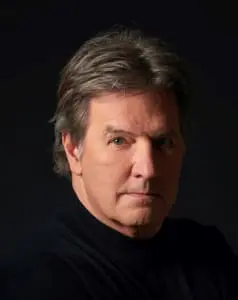
Rick Goings
Goings was recently elected to his second term as chairman of the college’s Board of Trustees, and both of his children attended Rollins. Its liberal arts foundation and emphasis on human-centered leadership made it a natural place to launch the Institute, he says.
An honorary fellow and advisory board member of the Global Peter Drucker Forum, Goings believes leadership requires more than the technical expertise business schools often excel at teaching. Like Peter Drucker, he sees management as fundamentally a human and social practice, one that depends on perspective, communication, judgment, and an understanding of people developed through experience over time.
The Rick Goings Institute will make the third side of Rollins’ broader Innovation Triangle, a more than decade-long initiative representing more than $200 million in investment across the college. The Triangle connects the new executive institute with the expanded Rollins Museum of Art, as well as the Alfond Inn, the college’s boutique hotel and conference venue.
The idea is to create an environment similar to Davos, where global leaders meet to exchange ideas, challenge assumptions, and work through complex problems together. Goings participated in the World Economic Forum more than a dozen times during his career, taking part in discussions on leadership, globalization, and women’s empowerment.
“The Institute is not going to look or feel like a business school. It’s going to feel like a convening venue, more like a TED Talk forum, with breakout spaces, very high tech, very commodious for convening in conversation,” says Grant Cornwell, president emeritus of Rollins College and chairman of the Rick Goings Institute Board of Advisors.
“We’re going to use art to teach business, and a business convening forum to talk about art.”
A DIFFERENT MODEL FOR EXECUTIVE EDUCATION
The institute will be structured as a separate LLC, owned by Rollins but with its own revenue model and leadership. Anil Menon, dean of Rollins’ Crummer School, is the CEO.
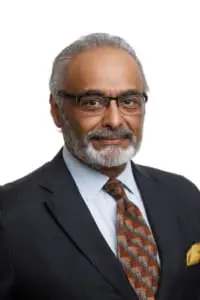
Anil Menon
The LLC structure allows the Institute to create and customize content and recruit faculty and practitioners more quickly than traditional academic units. That’s a competitive advantage in business environments that now change from month to month, week to week, and day to day.
“Companies don’t know what questions to ask because every three days, they’re hearing something new,” says Menon, whose career has included leadership roles at IBM, Cisco, and World Economic Forum.
“Executive education needs to be nimble.”
Too many executive education programs look interchangeable, teaching skills that have a half life of less than a few years. Instead, the goal is to create what Menon calls a “category of one” by combining executive education with Rollins’ liberal arts foundation, cross-sector dialogue, and a stronger emphasis on judgment and human-centered leadership. It will not grant degrees, and most of its offerings will be custom-built for organizations and leadership networks rather than open enrollment.
Institute programs will be built around three pillars:
- Strategic foresight focuses on helping leaders think beyond short-term results and recognize major shifts before they become crises. Menon argues that many organizations have become too focused on quarterly performance instead of preparing for long-term disruption tied to AI, geopolitics, and changing markets.
- System vitality centers on the health of organizations themselves. Rather than viewing companies as systems driven only by process and efficiency, the Institute frames leadership as managing human energy, trust, communication, and culture. “Charts and processes do not create performance; human energy, trust, and belief do,” the Institute’s planning documents state.
- Civic stewardship treats companies as part of broader communities rather than isolated market actors. Rollins leaders argue that organizations increasingly depend on trust, social stability, and long-term relationships with employees, local communities, and institutions.
One early partner is Young Presidents’ Organization, the global chief executive network founded by a 1950 Rollins alumnus who realized he lacked leadership peers after unexpectedly taking over his family business. Today, YPO includes more than 30,000 members in 130 countries representing companies with a combined $9 trillion in economic impact.
In a pilot programming session with YPO leaders, the Institute brought in a theater professor and a speech professor to work with executives on communication, executive presence, and how to command a room under pressure. The broader goal is to create seminar-style learning as opposed to lectures or frameworks.
“I think executive education should be about peer learning. Sometimes we tend to make the professor or the school the hero, when the heroes are the people who are coming and who want to learn from each other,” Menon says. “We want to become the enabling platform.”
THE U.S. DAVOS?
The new Institute will be adjoined to the art museum, with construction on the expansion expected to be completed within a year. Programming is expected to begin this fall.

Grant Cornwell
The ambitions for the Institute are intentionally large. Rollins leaders say they envision it as a global convening platform bringing together executives, policymakers, academics, and nonprofit leaders to work through major challenges shaping business and society.
“I’ll say something quite audacious, but it is a way we think,” Cornwell says. “In five years, I would like the Rick Goings Institute to be seen as the Davos of the U.S. We’re not looking to be at that scale, but that scale of influence, and that scale of quality and thought leadership. And I think we can get there.”
Goings agrees. He says the Institute’s broader goal is to reconnect leadership with purpose and long-term responsibility, not just performance.
Just look at his own career. Tupperware Brands was repeatedly recognized for sustainability, workplace culture, and corporate responsibility under his tenure, earning distinctions from Fortune, Forbes, and Barron’s.
He served as an inaugural champion of the UN Women HeForShe campaign and helped lead international expansion efforts for Boys & Girls Clubs of America, where he served for decades on the organization’s national board, including two terms as chairman. He and his wife, Susan, also founded World Youth Clubs to support youth development internationally.
Over his career, Goings received honors from organizations and governments around the world, including France’s Chevalier de la Légion d’Honneur and the Herbert Hoover Humanitarian Award.
“One of the three core things we’re trying to do (with the Institute) is focus on responsibility. There isn’t enough discussion about that in business, and a lot of well-meaning people shy away from business because they think it’s only about profits,” Goings says.
“What we want to show people is that doing good does great for the world. And, it actually is a fertilizer to business.”
DON’T MISS: TRAINING AI TO GOVERN FOR US: HOW THIS STANFORD GSB CLASS EXPERIMENTS WITH BUILDING AI AGENTS AND EXEC ED ROUNDUP: EDHEC SELLS SIPA, PURDUE’S BIG GIFT, AND SDA BOCCONI LAUNCHES GEOPOLITICS PROGRAM FOR CHIEFS OF STAFF
© Copyright 2026 Poets & Quants. All rights reserved. This article may not be republished, rewritten or otherwise distributed without written permission. To reprint or license this article or any content from Poets & Quants, please submit your request HERE.

