




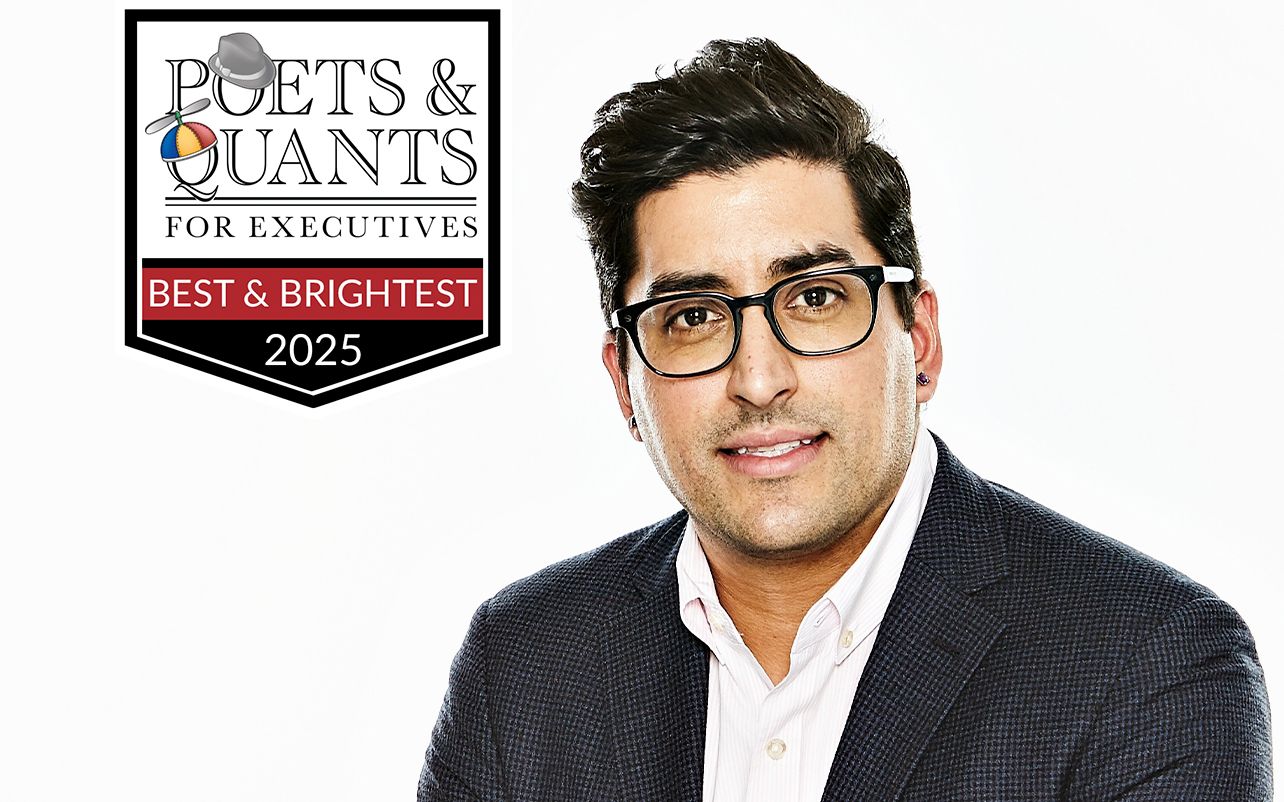
Eduardo Paredes
IE Brown Executive MBA (IE Business School and Brown University)
Age: 37
“Biotech strategic thinker with a sharp wit, data-driven mindset, and a knack for innovative problem-solving.”
Hometown: Chihuahua, Chih. Mexico but live in Providence, RI, USA
Family Members: Kevin J. Crowley (spouse) and Cobalamin “Coco” Paredes (miniature schnauzer)
Fun fact about yourself: I’m a drug development geek who loves tackling global problems and mentoring others.
Undergraduate School and Degree: New Mexico Military Institute (’06 A.S. in Science) and Carnegie Mellon University (’08 B.S. in Chemistry, ’10 M.S in Chemistry and ’12 Ph.D in Chemistry)
Where are you currently working? Leal Therapeutics, Inc as SVP of Chemistry, Manufacturing and Controls (CMC)
Extracurricular Activities, Community Work and Leadership Roles: IE University Blue Torch for academic achievement and Brown Student Senate Representative. On the professional side, I am a member of the N of 1 collaborative trying to bring cures to very rare patient populations (N=1). I am also a member of the oligonucleotide therapeutic society and other societies that are trying to bring genetic medicines to patients.
Which academic or extracurricular achievement are you most proud of during business school? The Blue Torch Award for academic achievement was extra special because at this stage in my career I was not looking for the top grade. I simply tackled the problems that professors put in front of us giving the task full dedication and the professors full respect. As with many degrees and give the caliber of cohort members, it’s hard to know where you are within the cohort, so this award was very special because it showed that my hard work and dedication was being recognized.
What achievement are you most proud of in your professional career? Recently, I was able to take an idea we had for this new treatment in my current start-up biotech and take it from the bench to the patients. This involved a lot of in vitro research, a fair share of in vivo animal toxicology work, and plenty of chemistry, analytics and regulatory oversight. To say that something that I drew on a piece of paper is now being administered to patients in a trial and has the potential to change the course of their disease is humbling.
Who was your favorite MBA professor? My favorite (and hardest) professor was Bradford Gibbs. He just has a way of making financial valuations and strategic thinking (which is far from my expertise) seem so accesible! A close second would be Seth Rockman. He really pushed us to evaluate the repercussions of our business models in equity and fairness around the globe.
Why did you choose this school’s executive MBA program? I chose this program as it was the right mix between business and sustainability. I wasn’t like traditional programs where they were more focused on business model or pure performance. We covered some of this, but this program focused on innovative solutions, sustainable business plans, people strategies, and a global vantage in an ever-evolving world.
Give us a story during your time as an executive MBA on how you were able to juggle work, family, and education? This is no joke! Speaking of joke, I found that handling all this work was very much like the solid-phase synthesis I do every day: stepwise, painfully iterative, and requiring constant attention. In short, you just do one thing at a time and somehow you get everything done.
Related to this powerful take home is our ability to accomplish much when we are not being distracted by the noise of the world, especially social media. It’s so easy to just disconnect from the world and go into a Meta environment. When we realize there are very serious problems to be solved, we can contribute if we snap out of it, educate ourselves, question everything around us, and develop a strong data-driven opinion upon which to act.
This purpose allowed me to be able to proofread papers in the car on the way to the amusement park or build presentations instead of doom scrolling before bed!
What advice would you give to a student looking to enter an executive MBA program? The investment generally seems large for an MBA, but in retrospect it will not be much compared to your potential. The key is to apply the lessons to work as soon as able. I have had instances, while still in the program, where I used accounting analysis to project selection or a global economic view on global supply chains. This came to the surprise of my CEO, who even asked if I would like to take on the accounting function of the firm (not quite).
Which MBA classmate do you most admire? I would have to say Moira Sherry. I had the privilege of being in her team during more than half of the program (we still make time for dinner once a month). She has an ability to manage so much more work than I do. She was always prepared to have a discussion on topics with new articles, perspectives, and a very global view of the world. She is doing this with a full-time job and two kids! It was really humbling. I always tried to go before her on forums as there was no following her. She has done this without sacrificing her humanity, kindness, and femininity, even with a tough work environment. Every time I thought about trying less hard, I thought to myself: “But Moira will make really good points so I have to keep up!”
What was the main reason you chose an executive MBA program over part-time or online alternatives? Online only alternatives seem so impersonal. Full stop: is there even another person on the other side? Other part time alternatives like the “12 hours every other Saturday” to me seemed like they were disconnected from reality. It was very refreshing to have days that started with finance, continued with my normal chemistry and manufacturing work, and then switched to Economics and Management and then back to regulatory. It really shows one how multifaceted we can be when we choose to learn a few concepts and the lingo. Fake it ’till you make it!
How did you finance your EMBA and what did you do to make tuition and associated costs more affordable? I applied for scholarships which were very generous, but paid for the program myself (6 figures!). Towards the end, my boss wanted to cover some of it and be supportive, but I decided this is something I needed to do for myself. Also, not having strings tied seemed like the best negotiation tool.
What is your ultimate long-term professional goal? I want to develop novel cures for people currently suffering around the world. At first, I thought that the science of it all was enough to know, but have realized that these companies need to manage their business cycles, people, and investments. To be successful, it’s not only looking at current market sizes, but also emerging trends and forecast future potential needs, especially in neurology. Being able to manage more of the entire lifecycle of the biotech start-up, both technically and in business, is my ultimate goal. I would be tempted to say I don’t want to be CEO (though I could see myself being able to do more of that function now having finished the MBA), but somewhere else in the C-suite, like CTO would be great! That said, titles come and go, what we get done is what matters. I have a great team now and hope to be able to lead them to success.
DON’T MISS: BEST & BRIGHTEST EXECUTIVE MBAS: CLASS OF 2025
© Copyright 2026 Poets & Quants. All rights reserved. This article may not be republished, rewritten or otherwise distributed without written permission. To reprint or license this article or any content from Poets & Quants, please submit your request HERE.

