





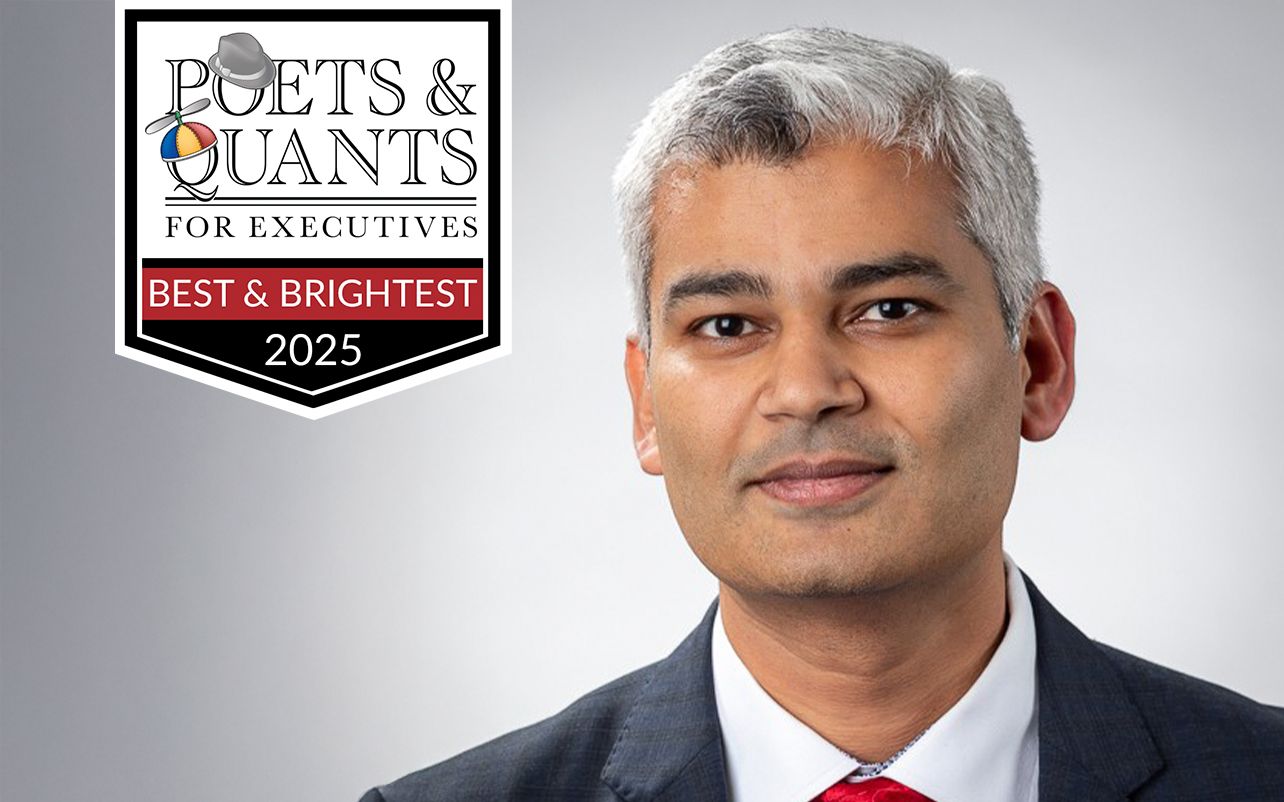
Prateek Singh
Samuel Curtis Johnson Graduate School of Management, SC Johnson College of Business, Cornell University
Program: Cornell’s Executive MBA Americas
Age: 39
“Curious, grounded, and driven. Passionate about learning, building great teams, and creating lasting impact together.”
Hometown: San Jose, CA
Family Members: Suneeti (Wife), Vivaan (Son, 12), Nysa (Daughter, 6)
Fun fact about yourself: I am a licensed pilot. Flying has always been a passion of mine, and it has taught me invaluable lessons about precision, situational awareness, and decision-making under pressure—skills that translate directly into my professional and academic life.
Undergraduate School and Degree: Bachelor of Engineering – Computer Engineering: Dharmsinh Desai University, India
Where are you currently working? Apple, Senior Engineering Manager – Unified Customer Analytics
Extracurricular Activities, Community Work and Leadership Roles: Throughout my Executive MBA journey, I have actively contributed to class discussions, mentored peers, and engaged in projects. My leadership extends beyond the classroom, as I play a key role in driving innovation and strategic decision-making at Apple. In addition, I have been deeply involved in mentorship and coaching, helping emerging leaders navigate their career paths.
Which academic or extracurricular achievement are you most proud of during business school? One of my proudest achievements was leading a consulting project for a major automaker, developing a go-to-market strategy for the Japanese market. Initially, our team believed that the lack of sales was the core issue. However, through rigorous analysis and research, we realized the real challenge was the pricing model. In a last-minute pivot, our team came together, leveraging diverse expertise to refine our recommendation. The client embraced our insights and praised the depth of our thinking. This experience reinforced the power of adaptability and collaborative problem-solving.
What achievement are you most proud of in your professional career? Every milestone has been a stepping stone to the next challenge, but one achievement that stands out is building a team and platform from the ground up. At Apple, I had the opportunity to establish a unified customer analytics engineering team focused on managing our installed base, integrating cross-functional insights to drive strategic decision-making. This initiative reshaped our approach to customer insights and played a key role in informing product strategies and long-term planning. Along the way, I had the privilege of working with and learning from some truly talented individuals.
Who was your favorite MBA professor? Each professor brings a unique perspective to the program and a few who made a lasting impact include Theomary Karamanis (Management Presentation) for her expertise in executive communication; Michael Sartor, associate professor at Smith School of Business at Queen’s University (Global Strategy) for his sharp insights into international business; Risa Mish (Critical Thinking) for her ability to challenge conventional wisdom; and Brian White (Financial Accounting) for making complex accounting concepts approachable. In addition, Ori Heffetz and Henry Schneider (Macroeconomics and Microeconomics) provided deep economic insights, while Manoj Thomas (Marketing) redefined how I think about customer centricity.
Why did you choose this school’s executive MBA program? Unlike my undergraduate engineering course, which was a very individualistic pursuit, an MBA is all about teamwork and collaboration. Cornell’s Executive MBA Americas in-person model stood out because it allowed me to learn from esteemed professors and my classmates’ diverse experiences and wisdom. The program’s emphasis on teamwork and hands-on, experiential learning provided an ideal environment for growth. It aligned perfectly with my goal of becoming a better leader while tackling complex, real-world business challenges. Additionally, the weekend format was a key factor in my decision, as it allowed me to balance work, education, and family without the challenge of taking time off consistently on Fridays. The opportunity to engage with a cohort of driven, like-minded professionals further enhanced my learning and broadened my perspective.
What is the biggest lesson you gained during your MBA and how did you apply it at work? The biggest lesson I gained was the importance of structured problem-solving, effective storytelling, and collaboration in decision-making. I frequently work with executives who rely on data to inform strategic decisions. The MBA refined my ability to synthesize complex insights into clear, actionable recommendations. It also deepened my understanding of the business context behind decisions, improving my overall performance. Beyond that, the program’s emphasis on teamwork and communication taught me how to better engage with cross-functional teams, aligning diverse perspectives to drive solutions. This holistic approach to problem-solving has allowed me to contribute more effectively to key initiatives, ensuring that data-driven decisions are well-informed, communicated, and executed collaboratively.
Give us a story during your time as an executive MBA on how you were able to juggle work, family and education? Balancing an executive MBA with a demanding career and family life requires disciplined and ruthless prioritization. One of the most challenging moments came when I was preparing for a major work presentation while leading a team project for class. To add to the complexity, my wife was traveling for work, and I had to step up even more at home. I strategically allocated my time—working late nights once the kids had gone to sleep, using lunch breaks for team projects, and dedicating evenings to family responsibilities. This experience reinforced the importance of time management and the unwavering support I received from my classmates and family, especially my wife, who constantly encouraged me throughout the journey.
What was your biggest regret in business school? Not having more in-person sessions. The cohort experience was incredibly enriching, and I wish we had more opportunities to rotate teams more frequently. Working with a broader set of peers would have allowed me to gain even more diverse perspectives and learning experiences.
Which MBA classmate do you most admire? It is impossible to choose just one, as I was surrounded by some of the brightest and most driven individuals. However, my San Jose team—Michael Cheung, Chandra Katta, and Maureen Simmons—stood by me through thick-and-thin, pushing each other to excel. Beyond my immediate team, I deeply admire Simrat Kaur and Kevin Yuen for their entrepreneurial spirit and resilience. Emily Cao’s passion and focus are truly inspiring, and Khizer Kapadia possesses one of the most brilliant financial minds I’ve encountered, always willing to help others grasp complex concepts.
What was the main reason you chose an executive MBA program over part-time or online alternatives? After close to two decades in the industry, I wasn’t looking to start from scratch—I needed a program that appreciated my experience while helping me sharpen the edges I knew required refining. While online and part-time programs offer flexibility, they often miss out on the deep, in-person collaboration that is core to real-world leadership. Cornell’s Executive MBA stood out because it was built just right for working professionals—it gave me the structured learning I was seeking without taking me back to the basics. The hybrid format allowed for immersive, face-to-face teamwork, something I found far more impactful than online interactions, while still offering flexibility to balance work and family. The opportunity to learn from and with other senior leaders in a live setting was transformational and elevated the entire learning experience.
How did you finance your EMBA and what did you do to make tuition and associated costs more affordable? I self-funded my EMBA. While it was a significant investment, I viewed it as an essential step toward my long-term growth. I also maximized the value of the program by actively engaging with professors, networking with classmates, and applying learnings directly to my work, ensuring a strong return on investment.
What is your ultimate long-term professional goal? My long-term goal is to take on a senior leadership role where I can drive data-driven decision-making at scale. I want to shape strategies that leverage analytics, AI, and customer insights to influence business growth while preserving customer privacy. Ultimately, I aspire to lead in a capacity that blends technology, business acumen, and leadership to make a lasting impact.
DON’T MISS: BEST & BRIGHTEST EXECUTIVE MBAS: CLASS OF 2025
© Copyright 2026 Poets&Quants. All rights reserved. This article may not be republished, rewritten or otherwise distributed without written permission. To reprint or license this article or any content from Poets&Quants, please submit your request HERE.

