





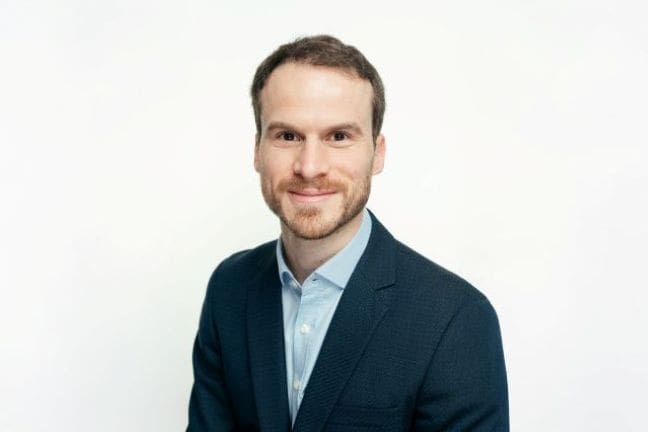
Antoine Colson
“Industrial director, innovation leader, and digital transformation catalyst connecting strategy, technology, people, and operations”
Graduation Year: HEC Paris Class of 2021
Current Role: Industrial Director | Innovation & Digital Transformation Leader
Why did you decide to pursue an Executive MBA?
After almost ten years of learning primarily on the job, I felt the need to pause, step back, and put my experience into perspective. I had grown into an Industrial Director role while also leading innovation and digital transformation initiatives. Yet I wanted to move beyond viewing manufacturing, innovation, and technology as separate disciplines. I wanted to understand how they could reinforce one another, and how my decisions connected to the company’s P&L, its business units, its customers, and its long-term strategy.
My motivation came from curiosity, ambition, and a genuine desire to keep growing. I wanted to challenge my assumptions, broaden my perspective, and prepare myself for more holistic and strategic responsibilities at the intersection of business, industry, innovation, and technology. I also wanted to develop an entrepreneurial mindset that I could apply within a multinational organization or, one day, to a venture of my own. Just as importantly, I wanted to spend time with other experienced leaders who were also willing to question their beliefs, share their experiences, and continue growing.
What led you to the HEC Paris EMBA, and how did you know this school and this program were the right fit for you?
I considered several schools, but HEC Paris quickly became the natural choice. Its international reputation, the quality of its faculty, the strength of its global network, and the diversity of the cohort all mattered greatly to me.
Before deciding, I met several HEC Paris EMBA alumni over coffee. What struck me was their pragmatism: they were ambitious, yet deeply grounded in the realities of the world around them. They shared a genuine desire to make an impact, rather than simply add another qualification to their resumes. I recognized in them the kind of leader I wanted to continue becoming.
The program also offered opportunities to learn beyond the core curriculum at other leading international institutions. Having already spent much of my career abroad, I wanted an experience that would keep exposing me to different cultures, perspectives, and business challenges. HEC offered exactly the combination I was looking for: strategic depth, entrepreneurial energy, technological openness, and real-world relevance.
How did you tailor your individual learning experience?
I deliberately chose the international cohort because I wanted to learn alongside people with very different professional, cultural, and personal perspectives. International exposure had already shaped most of my career, and I wanted the EMBA to extend that journey.
I selected the Entrepreneurship & Innovation specialization and complemented the core courses with modules at FDC in Brazil, Babson College near Boston, and Bocconi University in Milan. I also completed an intensive M&A module with students from a specialized finance master’s program. Despite the age difference, I was deeply impressed by their knowledge and analytical ability. Working with them was both humbling and energizing, and it was an excellent opportunity to consolidate what I had learned with exceptional professors.
My Capstone brought my interests together. I explored how to optimize the operations of a dark kitchen – then emerging as a strong post-COVID trend – by automating the kitchen and connecting it directly to food-delivery platforms through their APIs. It allowed me to combine entrepreneurship, digital architecture, and operational execution in one practical project. More importantly, it showed me how digital transformation can redesign an entire operating model, not simply automate isolated tasks.
How did you balance the demands of work, family, and the program while studying?
I never felt that I was sacrificing one part of my life for another, but I did have to prioritize very deliberately. I was fortunate to have a role that gave me some flexibility and involved less travel at the time. That made a significant difference.
An EMBA requires more than finding a few free hours in an already full calendar. To gain its full value, you need enough mental bandwidth to prepare, reflect, contribute to the group, and remain curious. This is particularly true during intensive and rewarding periods such as the Capstone project.
The experience strengthened my discipline, but it also taught me to protect time for what matters most. The program is most rewarding when you create enough space not only to complete the work, but also to embrace the conversations, relationships, and unexpected opportunities for growth along the way.
What’s a standout moment or memory from your time at HEC Paris?
What stayed with me most was not a single lecture or event, but the quality of the relationships we built. Beyond the technical knowledge and frameworks, I gained a group of friends who continue to help me grow.
They challenge me with honesty and kindness, and help me see the blind spots that are often impossible to recognize on our own. The cohort became a trusted circle of people whom I could call for professional and sometimes personal advice. I still do that today.
Even during the most demanding moments of group work, the kindness and openness within the group allowed us to step back, question our own reactions, and learn about ourselves as leaders. There were also moments when I was genuinely amazed by a classmate’s presentation or way of approaching a problem, only to find myself adapting that idea in my own work months later.
Perhaps the deepest personal transformation was almost unconscious. It did not happen during one class and it cannot easily be quantified. It came from the accumulation of conversations, different perspectives, moments of admiration, and honest exchanges with other leaders. Little by little, those experiences changed the way I listened, reflected, and led.
How has the program helped you grow personally or professionally since graduating?
The EMBA helped me stop viewing manufacturing, innovation, and digital transformation as separate domains. I began to see them as complementary levers of business performance: industrial execution provides the foundation, innovation opens new possibilities, and digital transformation helps connect and scale them across the value chain.
At Estée Lauder, this became visible in the way I approached investments, P&L impact, team dynamics, and the relationship between a factory, corporate functions, and global business units. My role was not simply to run a production site. It was to act as a connector: translating business priorities into industrial choices, bringing digital solutions into operations where they created genuine value, and helping teams embrace change.
The strategic perspective I developed at HEC became even more important at On, where I was responsible for designing the manufacturing footprint for LightSpray. The challenge was both industrial and entrepreneurial: turning breakthrough technology into a scalable operating model. The strategy, business-environment, and finance courses helped me map complex scenarios, analyze them more deeply, and make more balanced choices.
Across these experiences, I have increasingly seen my role as a catalyst – making innovation executable and digital transformation human, pragmatic, and firmly connected to strategy. The less visible change has been personal. Spending time with other experienced leaders made me more conscious of the value of listening, asking better questions, and seeking perspectives that challenge my own. It was a gradual evolution rather than a sudden transformation, but it has profoundly influenced the way I lead international and multidisciplinary teams.
Is this the industry and role you envisioned yourself in when you entered the program?
The industry was different from what I had imagined, but the direction of the role was exactly what I was seeking.
When I entered the program, I wanted to work at the intersection of industry, innovation, digital transformation, and strategy, with responsibilities that were more holistic and international. I could not have predicted that I would move from the beauty industry into sports technology and help create a manufacturing footprint for an entirely new production technology.
Yet the underlying ambition remained consistent: not simply to optimize existing operations, but to help shape new ones – connecting breakthrough ideas with industrial reality, enabling collaboration across functions and cultures, and turning strategy into scalable execution. The industry evolved, while the direction of my journey became even clearer.
What are some of the biggest takeaways or skills you gained from the EMBA experience?
One major takeaway was learning to see business, technology, and industrial choices as part of the same system. A decision made in operations can affect the P&L, the customer experience, the company’s strategic options, and its ability to innovate in the future.
A second was that transformation is fundamentally human. Digital solutions and innovative concepts create value only when people understand them, adopt them, and continue improving them. This reinforced the kind of leader I want to be: a catalyst who can build bridges between technical experts, operational teams, and business leaders, while keeping everyone focused on a shared purpose.
A third was intellectual humility. When experienced leaders from different industries and cultures examine the same problem, there is rarely only one valid perspective. Learning to listen, challenge my assumptions, and integrate those viewpoints made me a more thoughtful and more human leader.
Finally, I learned that some of the most important growth cannot be captured in a spreadsheet or attributed to a single course. It happens quietly through the people we meet, the conversations that stay with us, and the ideas that resurface months or years later. The EMBA reminded me that remaining curious and allowing others to challenge us are not separate from leadership; they are at the heart of it.
For those thinking about applying to the HEC Paris EMBA, what advice would you share with them?
Make sure you create enough space in your life to experience the program fully. The workload requires discipline, but the real value does not come only from completing assignments. It also comes from the conversations between classes, the group discussions, the different cultures represented in the cohort, and the knowledge accumulated by every participant.
Someone told me before I started that the program would pass very quickly. They were right. Its intensity makes the months disappear.
My advice would therefore be to invest even more time in getting to know the people around you, and to use the program to explore beyond the boundaries of your current title or expertise. Ask about their experiences, test your beliefs against theirs, and remain available to them after graduation. You can continue those relationships later, as I do today, but you should never underestimate how much knowledge, friendship, experience, and generosity already exist within your cohort.
DON’T MISS: 10 profiles of HEC Paris EMBA Alumni
© Copyright 2026 Poets&Quants. All rights reserved. This article may not be republished, rewritten or otherwise distributed without written permission. To reprint or license this article or any content from Poets&Quants, please submit your request HERE.

