





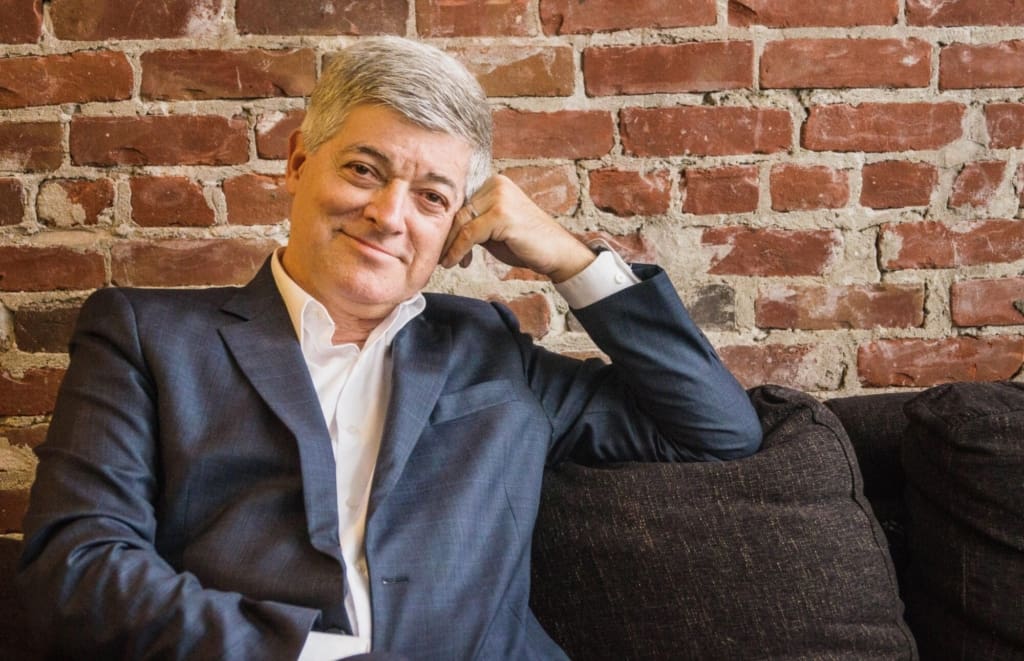
Poets&Quants founder John Byrne: “I still think the MBA has incredible value. A two-year program can be transformative. But the degree is overpriced. That’s a major issue. Tuition has outpaced inflation for a long time, and the payback has lengthened compared to what it was in the 1980s. So it requires more thought. That said, if you can get into a top-20 school, it’s still a no-brainer”
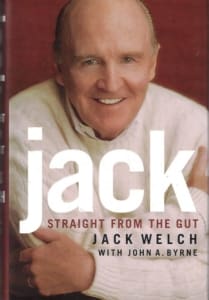
After 16 years building one of the most influential media platforms in graduate management education, John Byrne is stepping away from Poets&Quants, the site he founded after serving as executive editor of Bloomberg Businessweek – where he wrote a record 58 cover stories – and editor-in-chief of Fast Company. Over a career spanning decades, he also authored or co-authored more than a dozen books, including the bestseller Jack: Straight from the Gut, written with the late Jack Welch, the iconic CEO of General Electric.
“There was an audience out there that needed help making one of the biggest decisions of their lives,” Byrne says of prospective business school students. The realization was shaped during his years at Businessweek and became the foundation for Poets&Quants. The site was built to serve a highly engaged readership trying to navigate a high-stakes choice – and to give them the kind of clear, practical information that was often missing elsewhere.
Over time, with a steady focus on admissions, the student experience, and career outcomes, Poets&Quants grew into a central voice in the space. It also established itself as a sharp interpreter of rankings – not just publishing results, but questioning them, comparing them, and explaining what they mean. Along the way, it broke countless consequential stories and became a daily habit for applicants and schools alike.
I came to work for John and P&Q nearly 10 years ago, becoming managing editor in 2016. It’s a job that has taken me around the world and given me the chance to meet countless amazing people and tell their inspiring stories. And it has allowed me to learn, up close, from one of the best in the reporting game.
THE P&Q INTERVIEW WITH JOHN BYRNE, FOUNDER & EDITOR-IN-CHIEF OF POETS&QUANTS
What was the best decision you made at Poets&Quants?
It had to be just to launch it. I had been thinking about this for quite some time. I saw the potential of it while I was at Businessweek, and I knew that there was an audience out there waiting for something like Poets&Quants.
Part of that came from the success we had at Businessweek with the community we built online. One of the stats that really made the light bulb go off was that the average visitor to Businessweek did only about 1.8 page views per month. But those who went to the business school area of the site did something like 52 pages a month.
So I knew there was great potential to create a community and serve that audience. Traditional media has two problems. One is that journalists tend to write what they want to write, not necessarily what the audience wants or needs. The other is cost – when you advertise in traditional media, you’re paying for a lot of audience you don’t really want.
I knew that if I could attract the audience advertisers actually wanted, we could undercut traditional media and still build a strong business. If anything, my only regret is that I didn’t start earlier.
At what point did you know it was going to work?

“I’ve always tried to pull back the curtain on that and capture not just what happens, but what it feels like – the emotions, the triumphs, the setbacks, the sacrifices people make. I never wanted to write stories so they could put ads around them. I wanted to write stories that make people think more deeply about what they do and feel more deeply about it”
I knew it would work pretty quickly because within three months we were already cash-flow positive, and from the first year we made a profit. It was very slim, and it was mostly just me, but I understood what the margins could be. I knew we would be able to scale fairly quickly.
What was the biggest mistake you made?
When we first went into the business, one of the things I did was enter into a partnership with The Princeton Review. They sold all of the advertising for many years.
That was a prudent decision in the beginning because I was really focused on the editorial and didn’t want to deal with the business side. But it meant we gave up a tremendous amount of revenue. I think that was ultimately a mistake.
I should have just said, I’m going to do everything at once and take all the revenue myself. That cash flow would have allowed us to scale more quickly. At the time, we were giving up about 50% of every dollar, which is a lot of money.
What are you most proud of in your decade-and-a-half covering graduate business education?
I would say the Ethan Baron story on Stanford. That was a major coup. That was our story. We controlled it. We broke it. And it became a global story – everyone wrote about it after we did.
It had real consequence. To the extent that journalism can right a wrong, I felt strongly that we were doing that. The outcome was powerful. The dean ultimately had to resign, and the school moved forward.
There were hard decisions, too, because there were things we did not run. We had more detail that was pretty salacious, and we chose not to publish it. I don’t regret that. We showed discretion.
How has business education changed since you started covering it?
Schools have become much less reliant on the full-time MBA. They’ve significantly diversified their portfolios. The MBA still gets most of the attention because it’s a compelling degree, but it’s now a relatively small part of the overall business education universe.
The biggest change is the explosive growth in undergraduate business education, specialized master’s degrees – like business analytics, supply chain, and now artificial intelligence – and online learning. Those three areas have expanded access and brought more people into business education.
At the same time, it’s made schools more market responsive and increased competition. It’s also made the job of leading a business school more complex because there are simply more moving parts.
And globally, schools outside the U.S. have gined ground and are offering strong programs that compete in the marketplace in ways that weren’t as common before.
What does the future of business education look like from here?
I think schools are going to have to be much more market responsive. There are more programs, more formats, and more competition than ever before.
That makes the job of running a business school more complex. There are just more levers to pull and more decisions to make.
And globally, you’re going to continue to see strong competition from schools outside the United States. That’s already happening, and it’s only going to increase.
What advice would you give prospective graduate business students?
 It depends on where you are. If you’re an undergraduate or a recent graduate with a degree that may be difficult to leverage into a job, I would seriously consider a master in management. Those programs make you job ready, and employers want people who can contribute immediately.
For the MBA, I still think it has incredible value. A two-year program can be transformative. But the degree is overpriced. That’s a major issue.
Tuition has outpaced inflation for a long time, and the payback has lengthened compared to what it was in the 1980s. So it requires more thought.
That said, if you can get into a top-20 school, it’s still a no-brainer. It’s an incredibly valuable degree, and more employers are filtering candidates based on whether they have an MBA.
What makes you confident in the future of Poets&Quants?
We fulfill a real need. Even in the age of AI, where there’s a lot of content being generated, we provide information and intelligence that help people understand what it takes to get into a highly selective program.
We also show what the experience is like and what kind of people get in. The “Meet the Class” series, in a singular way, is one of the best sources of information on any given school in any given year. It tells you what’s new, what’s popular, what the culture is like.
There’s also no place that covers career outcomes as well as we do. And we cover rankings better than the people who actually produce them. We interpret them. We explain what matters and what doesn’t.
Our composite ranking is also incredibly useful. It lets you see where a school stands across multiple rankings and identify where one ranking might be off.
What makes Poets&Quants different editorially?
We cover the entire lifecycle in a way no one else really does. We cover the inputs – what it takes to get in. We cover the experience – what it’s actually like when you’re there. And we cover the outcomes – what happens in terms of careers.
Those are the three things that matter most to someone considering business school. And we go deeper on each of them than anyone else.
Then on top of that, we interpret rankings. We don’t just publish them. We tear them apart, we explain them, and we give people context. That’s something the organizations that produce the rankings don’t do.
Here’s a big one: What do you want your legacy to be?
I’ve always believed that business is the greatest drama on the planet. People invest the most productive years of their lives in it, and they deal with success and failure.
I’ve always tried to pull back the curtain on that and capture not just what happens, but what it feels like – the emotions, the triumphs, the setbacks, the sacrifices people make. I never wanted to write stories so they could put ads around them. I wanted to write stories that make people think more deeply about what they do and feel more deeply about it.
If that’s what I’ve done, I’m satisfied.
What’s next for you? Is this a real retirement or will we read about a new John Byrne venture in six months?
You might read about my novel. I have an idea for a novel based on the Italian immigrant experience in the United States. It’s a combination, to me, of Angela’s Ashes and films like Il Postino and Cinema Paradiso.
I grew up in an Italian-American household, and that experience is a big part of my life. I think there’s a powerful story thre – one that has comedy and sorrow, and explores the tension between reality and beauty, and the sacrifices people make to experience the most beautiful parts of life.
I’m not going to go around and get a contract. I’m just going to write it and see what happens.
I also bought a sailboat and I’m learning how to sail. I want to spend more time on the water. I want to spend more time with my wife, my children, and my grandchildren. I want to listen to more music, watch more movies, read the books that are piled up in my house, and pay more attention to my health.
I feel like I’ll finally have the time to do those things.
DON’T MISS STANFORD CONFIDENTIAL: SEX, LIES & LOATHING AT THE WORLD’S NO. 1 BUSINESS SCHOOL
© Copyright 2026 Poets&Quants. All rights reserved. This article may not be republished, rewritten or otherwise distributed without written permission. To reprint or license this article or any content from Poets&Quants, please submit your request HERE.

