








When it comes to Executive MBA programs, you would be hard pressed to find a larger group of options than at HEC Paris, one of the leading European business schools. The school, which first entered the market for MBAs for executives 40 years ago, has five different EMBA experiences for professionals featuring both modular and end-of-week formats.
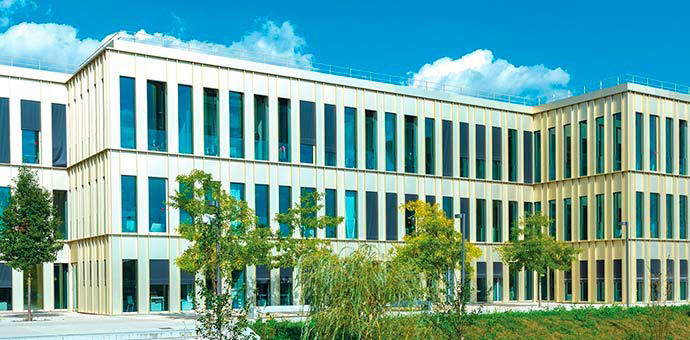
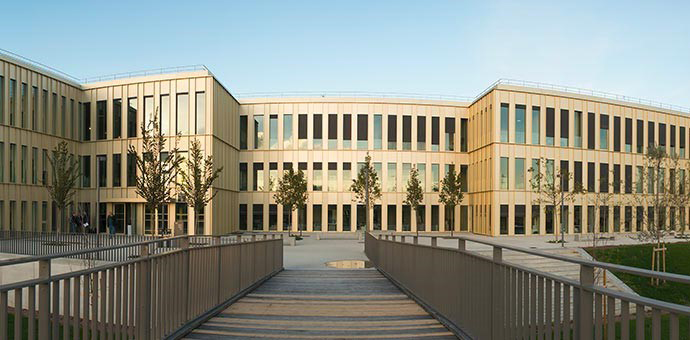
Four of the program’s five intakes are modular – January, February, September, and November. They’re organized around seven modules that last six to nine days every second month – the January, September, and November tracks on the school’s Jouy-en-Josas campus, ten miles from downtown Paris, France, and the February track in Doha, Qatar. It can be taken in either 15 or 18 months. The core curriculum zeroes in on leadership and strategy, offers students the chance to specialize in one of nine areas and culminates with a capstone project that allows participants to develop a challenge at work or an entrepreneurial idea in class.
The school also has a version of this program in downtown Paris itself that meets for two days every second week starting in March. While the program is taught in English, the November modular track is bilingual. Still organized in modules every second month, its courses are conducted in both English and French for professionals who want to understand the business environment of France or countries where French is spoken.
And finally, there’s the truly unique TRIUM Global Executive MBA, a partnership with two other world-class business schools, New York University’s Stern School of Business and London Business School. The 16-month program not only brings students to the campuses of all three schools in Paris, New York and London, it also features week-long immersions in Silicon Valley and Shanghai.
The portfolio offers students the opportunity to choose their own personalized learning journey in a format that best suits their individual needs and interests. “The market is very rich, very diverse and very difficult to find a format to match the needs of every candidate,” says Andrea Masini, associate dean of MBA programs.
When EMBA students graduate from these programs, they leave with three takeaways that resonate in the years ahead. “They gain the ability to think differently outside of their comfort zone,” adds Masini. “The second are our specializations which is their opportunity to go really deep into certain topics and discover new ways of thinking about an industry.”
Those specializations provide a set of electives in either a functional or secular field. Among them: Digital transformation, finance, energy, luxury, innovation and entrepreneurship, startups, social impact, board governance, healthcare, and management in the service sector, with unique experiences in each field. The specialization in social business brings students to Marseille and Bangalore, while the deep dive in designing and delivering exceptional service affords the chance to delve into that subject in Singapore and Paris. The innovation specialization comes with a stint at Babson College, one of the world leaders in the study of entrepreneurship, just outside Boston.
“In energy,” notes Masini, “the specialization was attended by those in oil and gas from Shell, BP and other major companies and in the second week we took the class to Berlin to look at the future of renewables. It was a revelation and helped the executives from more traditional energy companies understand that the industry they were working in was going to be challenged.”
And then, there is the capstone. This is more than a mere academic exercise. Many students tackle challenges they are facing at work, and nearly half of the projects are launched and go live to market. “It is all about having the possibility of focusing on a very specific project with a mentor and the support of faculty members and their peers,” says Masini. “The capstone is roughly eight months long depending on what time they start focusing on the topic. It’s about one third of the program’s length. You choose a project with a tangible outcome and execute on it at work. Many times, our students have decided to start a company at Babson. If it goes well, they will create a company once the project is done.”
Overall, 70% of the courses are in the core curriculum, 20% in a chosen specialization and the remaining 10% in customized electives or certificates or projects. Class sizes remain small to guarantee students a profound learning experience. “We want to make sure we have this personalized training,” explains Masini. “Our optimum class size is 60 but we can go up to 65. And then, all the different tracks join together for the courses in their specialization.”
A major goal of the program, of course, is professional development, centered around custom projects, such as personalized coaching, a Leadership Development Plan for each student, and on-going reviews of achievements during the program. Executives learn how to inspire diverse teams, build trust, lead change, and effectively negotiate with others. “Each person is given a coach, a track advisor and support by the career center which developed a separate curriculum for executives to develop skills needed at their level,” says Masini.
“Ten years ago, most executives were sponsored either fully or partially by their employers. They entered the program wanting to stay with their companies and to accelerate their careers there. Today most executives see the Executive MBA as a transformational activity. We have more and more willing to use their own finances to take the program because they may want to change their function or develop their own product and company.”
A central feature of the HEC Paris Executive MBA is the international makeup of the cohorts who are taught by a group of international faculties. Well over half of the program’s 30 professors come from outside France to teach an incredibly diverse group of students who bring their cultures and experiences to class. “We have candidates from the U.K., Italy, Germany, Brazil, Mexico, Japan, and of course France. We see more and more participants coming from outside of Europe, including Africa, Asia and the Middle East. About 5% comes from North America and 10% from Asia.”
EMBA students at HEC Paris average in their late 30s. Yet, says Masini, “We saw a much higher number of participants who are younger, let’s say in their mid-30s, who could do a full-time MBA but because of their professional obligations don’t want to take the risk of interrupting their careers. There is a very clear trend in the market.”
The pandemic has brought a new urgency to offer more of the program online. A small portion of the program is delivered via distance learning solutions. “The possibility of putting in place a pedagogical model that guarantees continuity regardless of your presence allows people to start online and come in person later,” believes Masini. “I think this is going to be the new norm. For a number of professional reasons, some candidates might find that they cannot travel. We have always offered candidates the flexibility of taking that track with the next group. Now, we can also offer alternatives given that we have the technology so you can take it online. The EMBA remains a program where face-to-face interaction is absolutely important. Our participants want that. So, it is valuable to offer a little more flexibility.”
In fact, HEC Paris is currently developing a new curriculum so that all the core courses have elements of them that can be accessed virtually. “We know that for certain core courses our participants need to have more time or study at their own rhythm,” says Masini. “So, if you are not an expert in finance you may need to read or listen to a class more often than someone with knowledge of finance. So now you will have a component to study the material before you come to class so you can have a more meaningful and richer interaction with your classmates when class takes place. That project started before the pandemic. It was an opportunity to improve those courses and make them better.”