



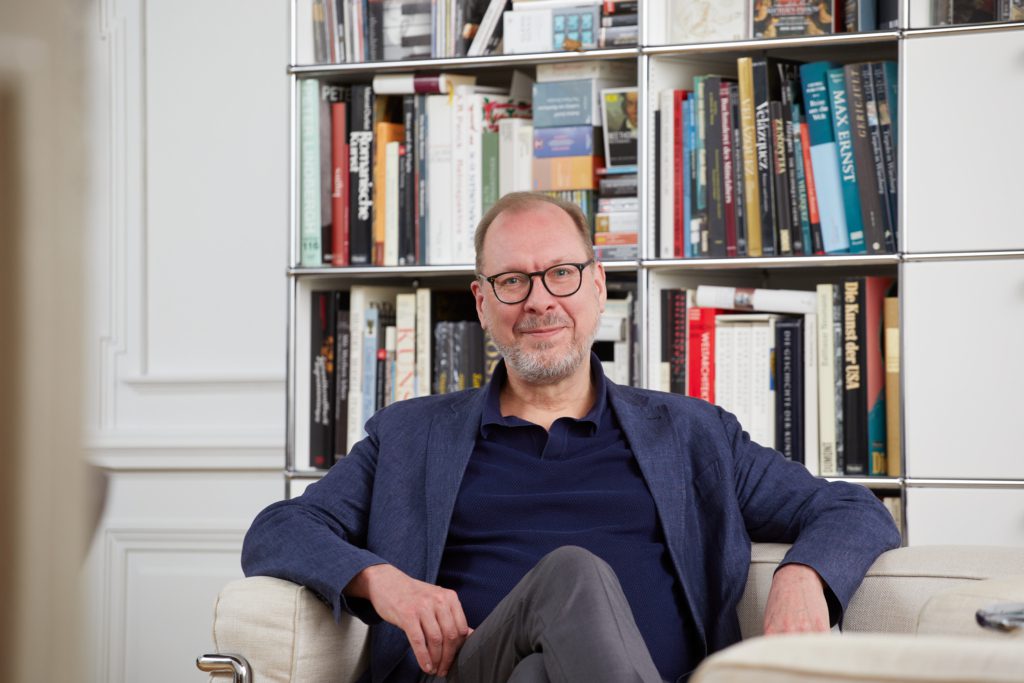
Former Mannheim Business School President Jens Wüstemann: “If you want to be a top school, don’t sacrifice on quality — and accept that the market decides. It’s not always comfortable, but it’s necessary.” Kirsten Bucher photo
When Jens Wüstemann became president of Mannheim Business School in 2010, many in Germany’s higher-ed establishment quietly believed the task ahead was impossible. No public university–affiliated business school in the country had ever cracked the top tier of European management education — and few thought one could. The legal constraints were too rigid, the MBA model too foreign, the competition too fierce.
Fifteen years later, Wüstemann leaves behind a legacy that rewrote those assumptions. During his presidency, he more than doubled Mannheim’s student enrollment (from 400 to 800), staff (from 26 to 56), programs (from 4 to 8), and revenue (from €5.5 million to over €12 million). More significantly, he turned a respected German research faculty into a fully-fledged, internationally-ranked business school — the only one embedded in a public university to reach that level.
“It’s not a miracle,” Wüstemann says. “But it took a clear strategy — and a willingness to embrace competition, even in a system that doesn’t always reward it.”
BUILDING A NEW MODEL — AND A NEW MARKET
When Wüstemann took the helm, Germany was still adjusting to the Bologna Process, a pan-European higher-ed reform that upended traditional models. Mannheim’s business faculty — already considered among the best in the country — had long offered the prestigious Diplom degree, but the Bologna shift required schools to transition to bachelor’s, master’s, and MBA formats. For Mannheim, that meant starting over — in structure, in mindset, and in market positioning.
“Mannheim was seen as having the best product in Germany,” Wüstemann says. “But Bologna told us, essentially: That’s nice, but the world has moved on.”
Wüstemann’s strategy was to embrace that change — and turn it into an advantage. His vision: establish Mannheim as a serious MBA and executive education provider on the European stage, without abandoning its public-university foundation. It would be a hybrid model — equal parts academic rigor, market relevance, and operational independence.
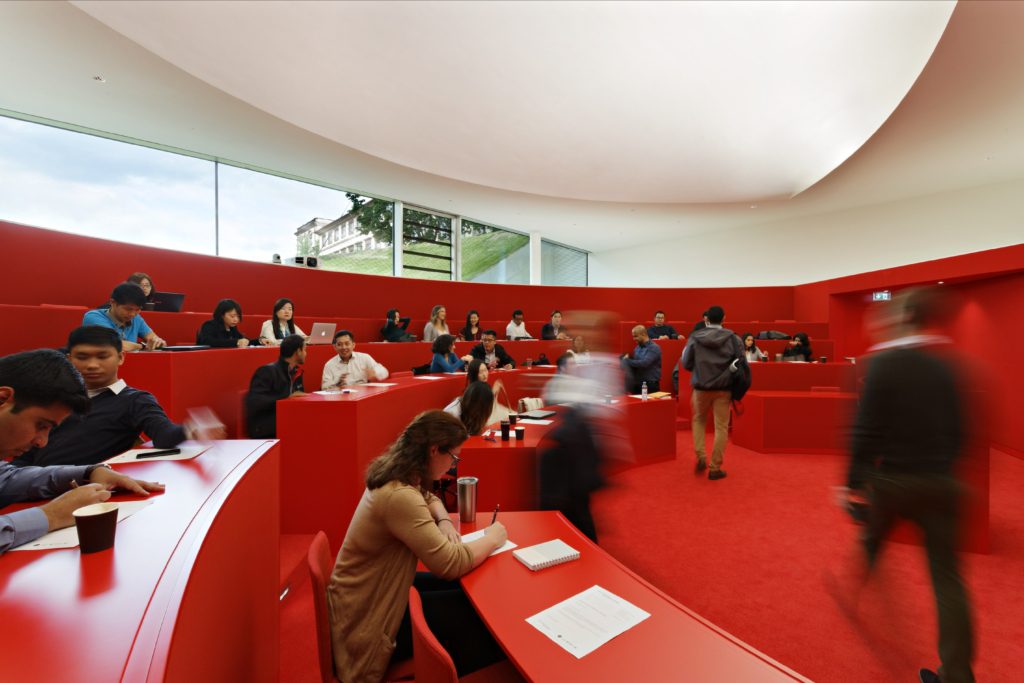
Mannheim has seen its enrollment, staff, programs, and revenue double in the 15 years under Wüstemann’s presidency. Kirsten Bucher photo
FROM LOCAL RESPECT TO GLOBAL RECOGNITION
Over the next decade and a half, Mannheim expanded in nearly every dimension: launching a full-time MBA, a suite of executive and part-time programs, and a fast-growing portfolio of custom and open-enrollment executive education. In 2024, Mannheim Business School entered the Financial Times open programs ranking — the final piece in Wüstemann’s full-spectrum strategy.
Today, the school draws students from around the world. Its flagship Executive MBA, offered in partnership with ESSEC Business School in Paris, is one of the most prominent EMBA programs in Germany. Other collaborations span top European and global institutions, including Bocconi, Copenhagen Business School, Tongji University in Shanghai, and Instituto de Empresa in Madrid.
Even more important, perhaps, is how Mannheim has leveraged its home-field advantage: the German Mittelstand. “We’re surrounded by global companies and hidden champions,” Wüstemann says. “SAP, BASF, Merck — they’re all within 200 kilometers. They trusted Mannheim’s brand in research and education. That gave us the runway to launch high-quality degree programs.”
DOUBLING DOWN — WITHOUT COMPROMISING QUALITY
What’s especially remarkable is that Mannheim’s growth under Wüstemann wasn’t just quantitative — it was qualitative. The school never diluted standards to scale up. Admission remained selective. Programs were designed for rigor, not volume. Rankings were taken seriously — not as an end, but as an external quality signal.
“We didn’t chase every tech trend or dump money into fads,” Wüstemann says. “We invested carefully. We focused on execution. And we didn’t sacrifice on quality.”
His background as a financial accounting professor helped. “I teach executive MBAs about cash inflow and cash outflow,” he says. “We had to grow, but we also had to sustain ourselves. That meant being competitive — and prudent.”
While Mannheim kept tuition relatively accessible — the MBA is around €50,000 — it relied on support from the state of Baden-Württemberg to fund research faculty, and also secured private funding for infrastructure and innovation. “The fixed costs of high research faculty are covered by the state,” Wüstemann explains. “If you balance it right, you can get the best of both worlds.”
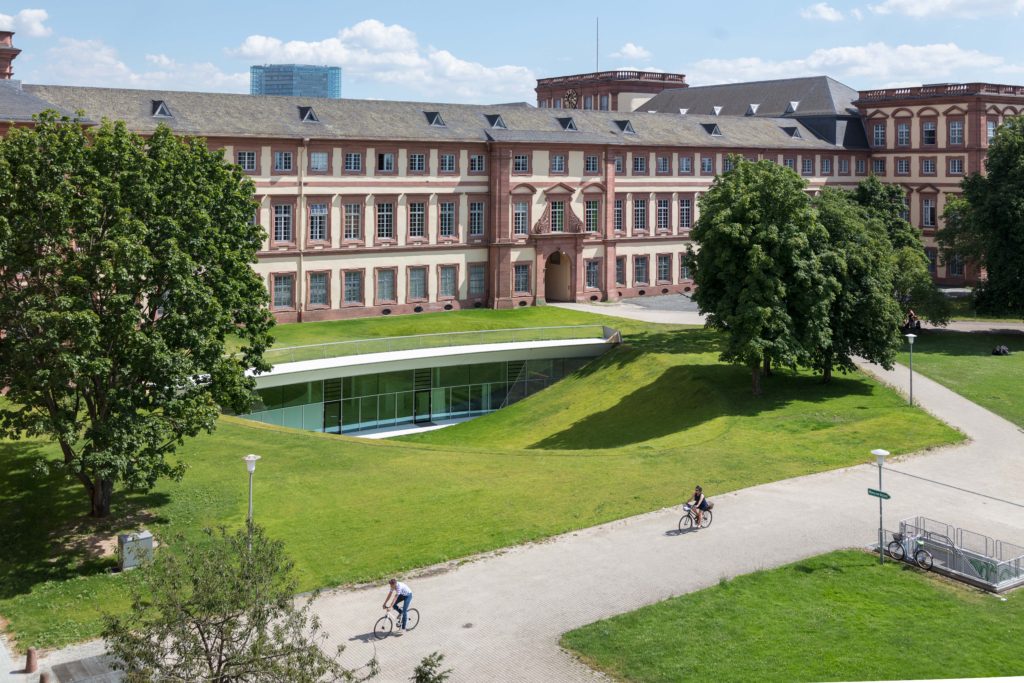
Mannheim Business School. Joerg Hempel photo
NAVIGATING A PUBLIC-PRIVATE BALANCE
That balancing act — between public university and private business school — wasn’t just administrative. It was cultural. “Public institutions don’t always think in terms of competition,” Wüstemann says. “But business education is a competitive marketplace. Students are customers. Rankings matter. Outcomes matter.”
He established Mannheim Business School as a legally distinct entity — able to operate with agility and market focus, while still rooted in the university’s academic excellence. That hybrid structure, he says, gave Mannheim a competitive edge: “We had research excellence, plus the ability to run programs like a top business school.”
PASSING THE BATON — TO 5 PEOPLE
Wüstemann officially stepped down on August 31, 2025. His role won’t be filled by a single successor — it will be absorbed by a five-person leadership team drawn from the public part of the business school. It’s a structural evolution Wüstemann fully supports.
“In the beginning, it made sense to have a single strong decision-maker — like in a startup,” he says. “But now that we’ve built the platform, the next step is integration. One Mannheim. One leadership team.”
The dean of the university’s business faculty will now also serve as president of the business school. Program directors in the public system will also lead post-experience offerings. “It’s not that five people are doing my job,” he says. “It’s that the joint brand and structure now extend across both parts of the school. And that’s a good thing.”
STILL TEACHING. STILL COMPETING.
Wüstemann isn’t leaving Mannheim. He will continue as academic director of the Master in Accounting & Taxation — a specialized part-time degree created with support from the Big Four firms and tailored to Germany’s rigorous audit profession. It’s also his passion project.
“Some people love marketing,” he says, smiling. “I love accounting and auditing. This program has produced leaders at KPMG, PwC, and beyond. I helped build it — and I’m still deeply involved.”
Asked what advice he’d offer other business school leaders, especially those in public systems, Wüstemann doesn’t hesitate: “Excellence and competition,” he says. “If you want to be a top school, don’t sacrifice on quality — and accept that the market decides. It’s not always comfortable, but it’s necessary.”
And what about those who still believe public schools can’t compete?
“Mannheim proves they can,” he says. “You just have to be willing to play the game.”
© Copyright 2026 Poets & Quants. All rights reserved. This article may not be republished, rewritten or otherwise distributed without written permission. To reprint or license this article or any content from Poets & Quants, please submit your request HERE.

